



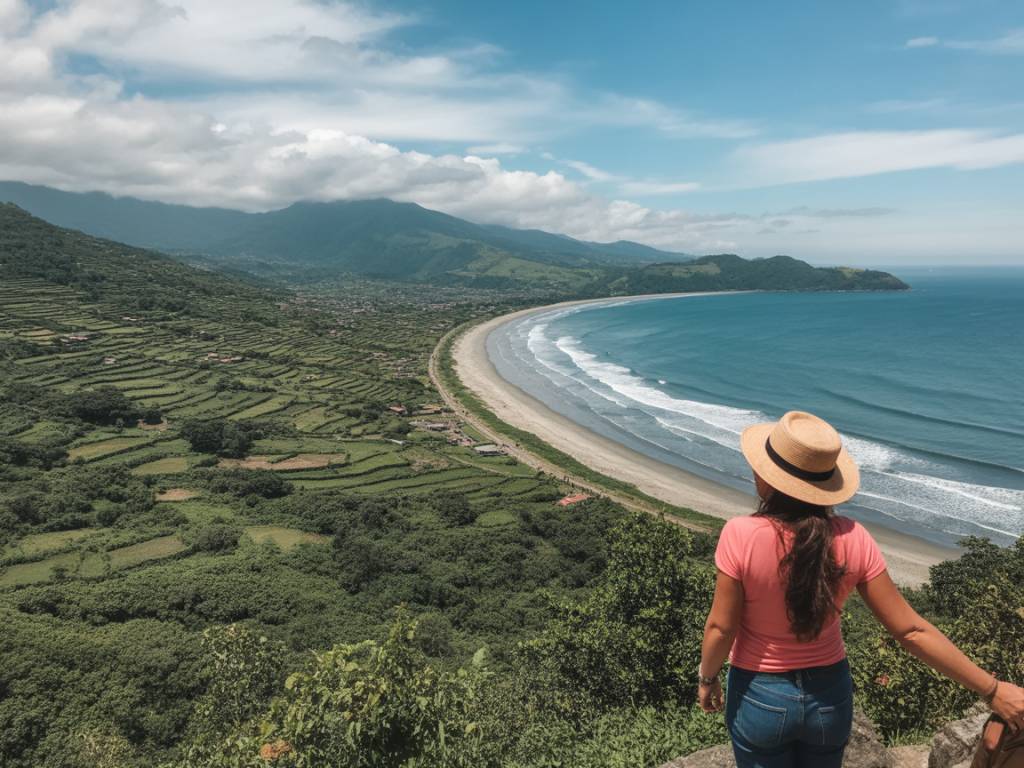
On my first morning in Colombia, I woke up to the slow hiss of a moka pot and the distant crow of a rooster. Mist was rising from the hills, the air smelled of damp earth and roasted beans, and for a moment I forgot that just 48 hours earlier I’d been stuck in a grey London drizzle. Two weeks later, I would have fallen head over heels for this country — for its coffee fincas wrapped in cloud, its colonial streets washed in pastel light, and its wild Pacific beaches where the jungle literally melts into the sea.
If you have two weeks in Colombia, you can taste all of these worlds: the Andes, the Caribbean, and the Pacific. You won’t see “everything” (no one does), but you’ll feel the pulse of the country — in the clink of tiny coffee cups, the echo of church bells over tiled roofs, the crash of waves on an empty black-sand beach.
Why Colombia for Two Weeks?
Colombia is a country of edges: mountain edges, ocean edges, cultural edges. In just a fortnight you can move from 2,600 meters above sea level in Bogotá to the warm Caribbean breeze in Cartagena, then to the humid, untamed Pacific coast. Each stop demands a different rhythm: Bogotá is all energy, the coffee region is slow-breathing, Cartagena sparkles, and the Pacific… the Pacific whispers.
My route looked like this:
- Bogotá – 2 to 3 days
- Coffee Region (Eje Cafetero) – 4 days
- Cartagena – 3 to 4 days
- Pacific Coast (Nuquí or Bahía Solano) – 3 to 4 days
It’s a loop that feels coherent yet surprising: colonial streets in three different climates, three different seas of green and blue, one constant presence — coffee.
Bogotá: Thin Air and Thick Culture
Bogotá is where the altitude hits first. Walking up a gentle hill in La Candelaria, I caught myself breathing as if I’d just sprinted. The city sits at 2,600 meters, and you feel it in your lungs, but also in the clarity of the light: sharp, almost metallic, cutting between red-brick buildings and colourful murals.
I based myself in La Candelaria, the old quarter, where houses lean into one another like gossiping neighbours. Cobblestone streets climb and curl; tiny cafés hide behind heavy wooden doors. My first coffee was in a café barely wider than my outstretched arms, where the barista looked like a university student and spoke about beans with the seriousness of a sommelier.
With two or three days, you can let Bogotá slowly reveal itself:
- La Candelaria: Wander without a map. The walls here are covered in street art — enormous faces, dreamy birds, political scenes — a constantly evolving open-air gallery. Every corner seems to hum with guitars or quiet conversations.
- Plaza Bolívar: Pigeons, protests, ice cream sellers, and the weight of history all share this central square. I watched a school group in bright uniforms chase one another around the statues, their laughter bouncing off the cathedral façade.
- The Gold Museum (Museo del Oro): Thousands of pre-Hispanic gold pieces glimmer in a soft half-light. It’s strangely intimate: tiny gold frogs, intricate pendants, masks that feel like they still remember the hands that made them.
- Monserrate: Take the cable car up around sunset if the sky is clear. Bogotá spreads out below like a galaxy of lights, stretching to the mountains. At the top, the air is colder, thinner, and the smell of grilled arepas drifts from the food stalls.
In the evenings, I found myself huddled in bars in Chapinero, sharing bottles of Colombian craft beer with strangers who quickly became friends. This city is a good place to land, to adjust, to listen. It asks for your attention, then sends you on your way.
Coffee Fincas: Mist, Mornings and the Art of Slowness
From Bogotá, a short flight brought me into the heart of coffee country: the Eje Cafetero. Outside the tiny airport in Pereira, the air felt instantly softer, more humid. A taxi wound me through rolling hills, across narrow bridges, past simple roadside eateries where steam rose from giant pots of soup.
I stayed near Salento, in an old coffee finca perched on a hill. The house had a creaking wrap-around balcony painted bright blue and red, hammocks swaying in the breeze, and a kitchen that always smelled faintly of panela and citrus. At night, the frogs and insects held their own improvised orchestra; in the early morning, it was the birds’ turn.
A coffee tour here isn’t a tourist trap; it’s an initiation. One cool morning, I followed the owner, Don Carlos, between rows of coffee trees heavy with red cherries. His hands moved quickly, almost tenderly, selecting the ripest fruit. We spoke about climate change, about how the rain has become erratic, about the patience required to tend something that takes years to bear fruit.
We watched as the cherries were washed, pulped, dried, roasted. When I finally held a small white cup of the finca’s coffee, its surface trembling slightly from my hands, it felt almost ceremonial. The first sip tasted of chocolate and citrus, warm and clean. I understood suddenly why coffee isn’t just a drink here; it’s history, economy, ritual.
Between finca mornings and coffee tastings, I explored the region:
- Salento: A town of painted balconies and wide smiles. On the main square, men in cowboy hats lean against their jeeps, dogs nap in the shade, children chase each other with sticky ice-creams. Climb the Mirador at sunset for a view over the valley, the hills folding into one another like green waves.
- Cocora Valley: Just outside Salento, this valley feels like a painting. The wax palms — impossibly tall, slender trunks with shy crowns of leaves — stand like silent guardians in the mist. I hiked a circular route, crossing wooden bridges and muddy paths, my boots sucking into the earth as the weather shifted from sun to drizzle in minutes. The sound of a distant river followed me, invisible but always present.
- Filandia: Smaller and slightly less visited than Salento, with perfectly restored colonial houses and a slower, almost dreamy atmosphere. I sat on a bench and watched an old man polish his motorbike while humming an old bolero. Time seemed to stretch here.
Four days in the coffee region recalibrate your internal clock. You wake with the light, eat what grows nearby, and measure your day not in emails or meetings, but in cups of coffee and changing shades of green.
Cartagena: Sunlight on Stone and Caribbean Nights
Leaving the mist of the Andes behind, I flew to Cartagena and stepped into a different painting entirely. The air here was thick and warm, wrapping around me like a shawl. The scent of salt, diesel from passing boats, and ripe mango from street vendors mingled in the streets.
The walled city is a maze of ochre, coral, and soft blue façades, with bougainvillea spilling from balconies like technicolor waterfalls. Early in the morning, the streets are quiet: the click of my sandals on stone, the distant sound of sweeping brooms, the cathedral bells marking time. As the day heats up, so does the noise — music from open windows, guides calling to groups, the occasional shout of “¡Agua, agua fría!” from a vendor with a cooler.
I walked for hours, letting the patterns of the tiled floors and the wrought-iron balconies guide me:
- The Old City Walls: At sunset, everyone seems to drift here, drawn by the idea of watching the sun slide into the Caribbean. Couples sit close together, children chase kites, vendors shuffle by with buckets of beer. The sky turns from blue to gold to a deep, cinematic orange.
- Getsemaní: Once overlooked, now buzzing with art and nightlife. Murals cover entire blocks, telling stories of resistance, love, and daily life. I spent an evening in Plaza de la Trinidad, sipping a cold beer from a tiny shop while street performers juggled and danced. The air smelled of grilled fish and fried arepas de huevo.
- Rosario Islands: A short boat ride away, these islands offer a break from the city’s intensity. I spent a day swimming in clear turquoise water, the sun on my shoulders, fish flickering under the surface in iridescent flashes. On the way back, the wind tangled my hair and the horizon blurred slightly with the approaching dusk.
Cartagena is sensual in the most literal sense: everything is about what you feel on your skin, what you taste, what you hear late at night. Music spills from bars until the early hours. One evening I found myself in a tiny salsa club, following the hesitant lead of a local who patiently counted the steps into my ear: “uno, dos, tres… cinco, seis, siete…” My rhythm was far from perfect, but in that cramped, sweltering room, everyone’s clumsy joy was contagious.
The Pacific Coast: Where the Jungle Meets the Sea
If Cartagena is a polished jewel, Colombia’s Pacific coast is a rough, beautiful stone — powerful in its rawness. From Cartagena, I flew via Bogotá to Nuquí, a thin strip of runway between jungle and ocean, or you could choose Bahía Solano. Both are small, remote, and feel like the end of the road, in the best possible way.
The first thing I noticed when I stepped off the tiny plane was the soundscape: a low, constant roar of waves, overlaid with bird calls and the rasping, insistent buzz of insects. The air was heavy, like a warm hand pressed gently against your chest.
From Nuquí, a wooden boat carried me along the coast to a simple eco-lodge. We skimmed over water the colour of liquid metal under an overcast sky, passing empty beaches framed by dense jungle. Every so often, a cluster of houses would appear, bright shirts hanging on washing lines, children waving from the shore.
Here, days arrange themselves around the tide, the rain, and — in season — the whales. I visited from July to October, when humpback whales arrive to breed and give birth. One cloudy morning, we set out early, the boat cutting through a light drizzle. After half an hour we killed the engine and drifted, the silence almost shocking after the chug of the motor.
And then, there it was: a vast, dark shape bursting out of the water, a plume of spray erupting into the air. A whale, close enough for me to see the texture of its skin. It disappeared, then surfaced again alongside a smaller shape – a calf. Time blurred. It might have been ten minutes or an hour that we watched them surface and dive, the sound of their breath carrying across the water like a slow exhale.
Back on land, the coast offered its own quiet adventures:
- Black-Sand Beaches: The sand here is volcanic, fine and dark. At low tide, it glistens, reflecting the steel-grey sky. Walking barefoot, I could feel pockets of lingering warmth where the sun had briefly pierced the clouds.
- Jungle Walks: Short trails led from the lodge into a dense, dripping green. Leaves the size of umbrellas, bright poison dart frogs flashing like tiny jewels, the distant crash of a waterfall guiding the way. The humidity wrapped around me like a second skin.
- Natural Hot Springs: One afternoon, after a rainy walk, I sank into a pool of warm water rising from the earth, steam ghosting gently into the damp air. The river nearby was swollen and furious; the hot spring was calm, almost meditative.
What struck me most on the Pacific coast was the darkness at night. No neon, no car headlights, just a deep velvet sky and the sound of the sea. Lying in a hammock, I listened to the waves and thought how strange it was that a country so famed for its cities and coffee could steal my heart most completely with a wild, almost empty beach.
Practical Tips for Two Weeks in Colombia
A journey like this is a mix of logistics and letting go. A few practical notes from my notebook:
- Best time to go: Colombia is a year-round destination, but consider:
- Coffee Region: generally pleasant all year; expect some rain, which is part of its charm.
- Caribbean (Cartagena): December to April is drier and less humid.
- Pacific Coast: wild and rainy anytime; July to October for whale watching.
- Getting around: Domestic flights save precious time on a two-week itinerary. Airlines like Avianca and LATAM connect major cities to smaller hubs. For shorter distances in the coffee region, buses and shared jeeps are affordable and frequent.
- Safety: Colombia today is very different from the headlines of decades past, but basic precautions still apply:
- Use registered taxis or ride apps in big cities.
- Avoid flashing valuables; keep only what you need on you.
- Ask your accommodation which areas are best avoided at night.
- Money: Cash (Colombian pesos) is essential in rural areas and on the Pacific coast. ATMs are easy to find in cities like Bogotá and Cartagena; withdraw enough before flying to remote zones.
- Language: Spanish will open doors and smiles. Very little English is spoken outside the main tourist spots. Learn a few basics — “buenos días,” “gracias,” “¿cuánto cuesta?” — they go a long way, and Colombians are delightfully patient with clumsy attempts.
- What to pack:
- A light waterproof jacket for Bogotá, the coffee region, and the Pacific.
- Comfortable walking shoes (those cobblestones are charming but not gentle).
- Quick-dry clothes and a swimsuit for the coasts.
- Insect repellent, especially for the Pacific and jungle walks.
- Coffee etiquette: In humble cafés, order a tinto for a simple black coffee, often served in a tiny cup. In specialty shops, let the barista guide you — they take a quiet pride in explaining origins and methods.
Two weeks in Colombia pass quickly, yet they stretch too — like those long Pacific waves — leaving salt, coffee, and a bit of red dust in your memory. When I think back, I don’t remember the transfers or the check-in counters. I remember a steaming cup cradled in both hands on a foggy finca terrace, the way my feet slipped on wet jungle stones, the golden glow of Cartagena at dusk, the soft thud of a whale’s tail on water somewhere off a forgotten stretch of coast.
And I remember thinking, as my plane lifted off from Bogotá on the final day, that this was not a goodbye, just an “hasta luego” — a promise to return to the country that smells of coffee at dawn and of the sea at night.