


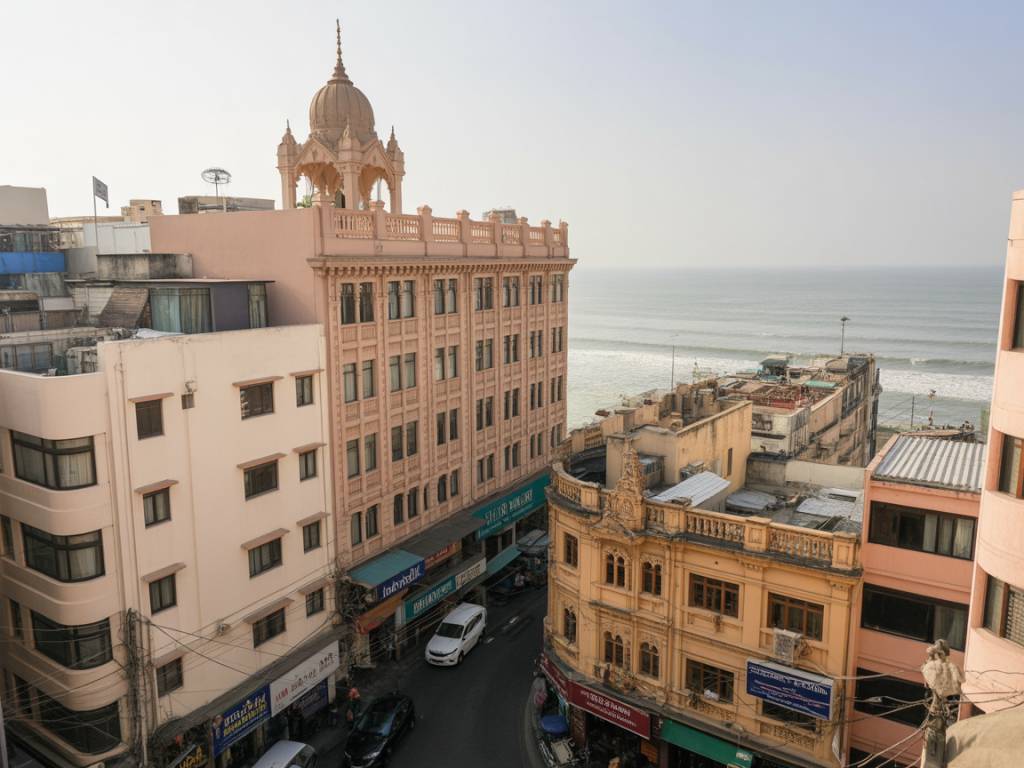
Mumbai doesn’t reveal itself from behind glass and marble. It reveals itself in the salt air rolling off the Arabian Sea at six in the morning, in the clang of temple bells cutting through traffic noise, in the smell of cinnamon and cardamom drifting out of a bazaar still half-asleep. If you want to feel the city rather than merely pass through it, a 3 star hotel in Mumbai is often your best possible base — affordable, central, and planted right in the middle of the action.
This guide walks through why 3-star stays work so well in Mumbai, and which neighbourhoods put you closest to the markets, temples and coastline that make this city unforgettable.
Why a 3 star hotel mumbai: character-filled stays close to markets, temples and the sea make sense
Mumbai is a city of extremes. Bollywood excess on one street, hand-pulled carts on the next. A good 3-star hotel sits comfortably in the middle — enough comfort to recharge after a day in the heat and crowds, without sealing you off from the city’s pulse.
Here’s what typically sets these stays apart:
- Prime locations in lived-in neighbourhoods: Many 3-star hotels are tucked into lanes that lead directly to flower markets, waterfront promenades or temple courtyards — distances that luxury towers in business districts can’t match.
- Real street-level energy: A chai stall on the corner, a temple bell that quietly replaces your alarm clock, a vendor arranging jasmine garlands below your window — these are the details you simply don’t get behind a glass facade.
- Smart value: Budget saved on the room means more to spend on a ferry to Elephanta Island, a long tasting session at Crawford Market, or a last-minute cricket ticket at Wankhede Stadium.
- Practical comfort: Air-conditioning, hot showers, clean linen, and often a simple breakfast included — exactly what you need after weaving through humid, crowded streets all day.
A fair word of warning: « 3-star » covers a wide range in Mumbai. Rooms can be compact, street noise is real, and older buildings sometimes show their age. But those imperfections are part of the city’s character — and if you lean into them, these hotels feel like cosy launching pads rather than just places to drop your bags.
Fort and Colaba: heritage streets, bazaars and the harbour
Southern Mumbai is where colonial architecture meets the restless energy of the sea. Around Fort and Colaba, the streets unfold like scenes from a period film: high-ceilinged banks, fading Irani cafés, students spilling out of libraries, and grand stone facades worn smooth by decades of monsoon rains.
A 3-star stay in this area typically puts you within easy walking distance of:
- Colaba Causeway Market: A long, lively bazaar of cotton kurtas, leather sandals, antique brass, and constant bargaining — open from mid-morning well into the evening.
- Gateway of India and the harbour: Ferries leave from here to Elephanta Island (a UNESCO World Heritage Site), and the sea wall at dusk is one of Mumbai’s great free pleasures.
- Crawford Market (Jyotiba Phule Mandai): A short taxi ride or brisk walk north — a Victorian-era covered market heaped with fruit, spices, flowers and live poultry.
- Kala Ghoda art district: Galleries, bookshops and independent cafés clustered around a single pedestrianised lane.
Hotels like Residency Hotel Fort and several modest heritage-style properties around Colaba offer atmospheric rooms — sometimes with original tiled floors, high ceilings, or vintage furnishings — at prices far below what you’d pay in newer business districts. Early mornings here are particularly special: bookshops roll up their shutters, incense drifts from roadside shrines, and the grand steps of Chhatrapati Shivaji Terminus fill with commuters before the city properly wakes.
Kalbadevi and Bhuleshwar: where Mumbai’s market culture is at its most intense
If markets are your reason for coming to Mumbai, this is the neighbourhood that will make your trip. Kalbadevi and Bhuleshwar form the old commercial heart of the city, and they operate at a pace and volume that few places on earth can match.
What you’ll find on the doorstep
- Chor Bazaar: The legendary « Thieves’ Market », sprawling across Mutton Street, where old film posters, gramophones, brass oil lamps, battered suitcases and colonial-era curiosities jostle for space.
- Mumbadevi Temple: The neighbourhood’s patron goddess, set deep in a tangle of lanes where flower sellers and incense vendors crowd the approaches. A quick prayer here is as much a part of local life as a morning cup of chai.
- Zaveri Bazaar: One of Asia’s largest gold and silver jewellery markets — even if you’re not buying, the glitter and noise of the lanes is an experience in itself.
3-star hotels in this area tend to occupy older buildings that have witnessed decades of trade. Lobbies may be modest, rooms compact. But you step outside and you’re immediately inside the city’s living, breathing commerce: jasmine garlands by temple doors, stacks of saris glowing in afternoon light, tiny vegetarian thali restaurants packed with office workers. For travellers who want full immersion, there is nowhere quite like it.
Marine Drive and Girgaum: sea views, temple bells and old neighbourhood charm
Marine Drive — Mumbai’s famous « Queen’s Necklace » — is one of those rare stretches of urban coastline that genuinely lives up to its reputation. The curved promenade traces the Arabian Sea for nearly four kilometres, and at dusk, when the lamp posts flicker on and the sky softens over the water, it’s hard to think of a more beautiful place to simply sit and do nothing.
Just behind the seafront, in Girgaum and around Charni Road, the city settles into quieter residential lanes, family-run shops and small temples. Staying in a 3-star hotel here offers something rare: the sea at the end of the road, and the city’s older, unhurried soul just a few minutes’ walk away.
Highlights within easy reach
- Girgaum Chowpatty Beach: Arrive early for calm waves and families doing yoga on the sand; return at dusk for bhelpuri carts, fairy lights and a cheerful evening crowd.
- Babulnath Temple: Perched above the city on a rocky rise, this Shiva temple attracts a steady flow of devotees and offers surprisingly peaceful views over the rooftops.
- Promenade walks: The stretch from Nariman Point to Chowpatty is one of Mumbai’s great free pleasures — best at sunrise or in the hour before sunset.
Several hotels here offer sea-facing rooms where the sound of waves and the distant murmur of traffic create that oddly soothing Mumbai lullaby. It’s an ideal choice if your version of a perfect evening involves a twilight walk under the Queen’s Necklace lights followed by a clean, simple room and a good night’s sleep.
Bandra: bohemian lanes, old churches and seaside promenades
Further north along the coast, Bandra is Mumbai’s most creatively charged neighbourhood — a blend of crumbling Portuguese-era bungalows, street murals, independent coffee shops and lively night-time venues. It has a distinctly different energy from South Mumbai: younger, more eclectic, and surrounded by water on three sides.
A 3-star hotel in Bandra places you close to:
- Bandra Bandstand and Carter Road: Two seafront promenades where locals jog, sit on stone benches facing the waves, and share roasted corn from paper twists at sunset.
- Mount Mary Church: A 17th-century hilltop basilica that draws both Catholic pilgrims and curious visitors, particularly during the annual Bandra Fair in September.
- Hill Road and Linking Road markets: Bustling with affordable clothes, shoes, street food and the particular pleasure of browsing without any agenda.
- Local café culture: Bandra has a stronger independent coffee and brunch scene than almost anywhere else in Mumbai — good for slow mornings before heading out.
It’s worth noting that Bandra sits on the Western Railway line, making day trips to other parts of the city straightforward and inexpensive. If you’re splitting your time between South Mumbai landmarks and the northern creative districts, a base here can work very well.
Practical tips for booking a 3-star hotel in Mumbai
- Book well ahead for peak season: October to February is Mumbai’s most comfortable weather window — dry, relatively cool, and popular. Rates rise and availability tightens.
- Check proximity to a train station: Mumbai’s suburban railway is the fastest way to move across the city. A hotel within ten minutes’ walk of a Western or Central line station dramatically expands your range.
- Read recent reviews carefully: Standards vary significantly within the 3-star category. Look specifically for comments on noise levels, air-conditioning reliability, and how responsive the front desk is.
- Ask about sea-facing or courtyard-facing rooms: In hotels with a mix of room types, the difference in experience between a street-facing and a quieter-facing room can be substantial.
- Factor in monsoon season: June to September brings heavy rainfall and high humidity. Some older 3-star buildings are better maintained than others — again, recent reviews are your friend.
Mumbai rewards the traveller who gets close to it — close to its markets at dawn, to its temples at dusk, to its sea at any hour. A well-chosen 3-star hotel in the right neighbourhood doesn’t just give you a place to sleep. It gives you a front-row seat to one of the world’s great cities, in all its beautiful, exhausting, unforgettable complexity.