


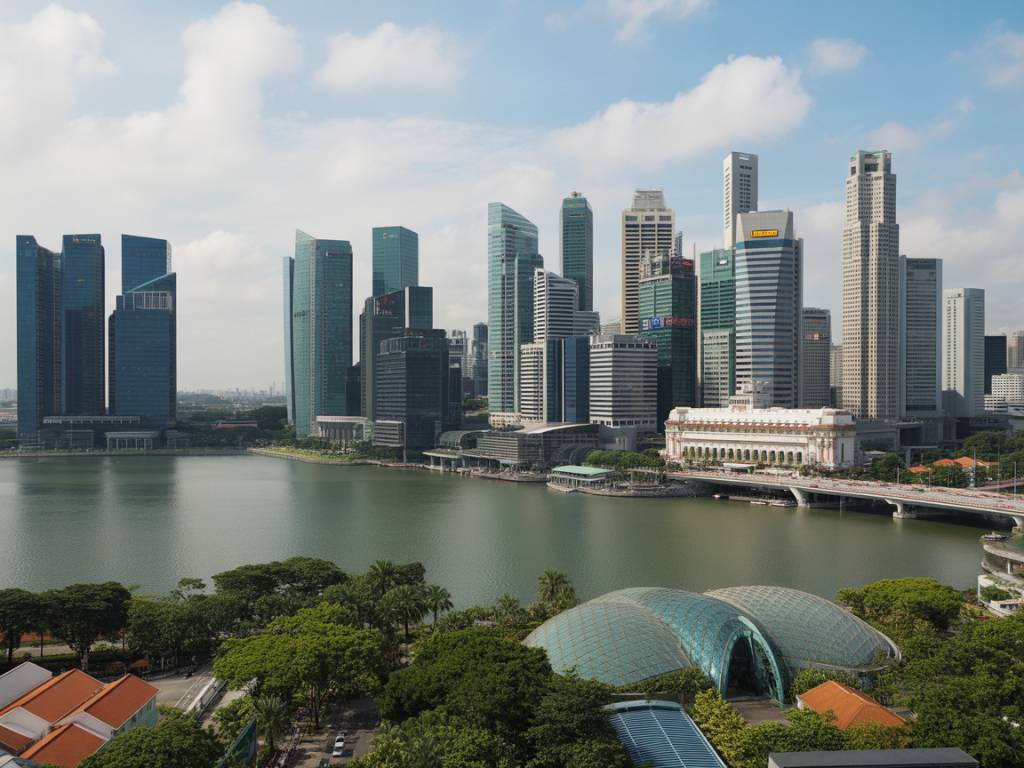
There are cities that whisper, and there are cities that hum. Singapore hums – softly, steadily – with the sizzle of woks, the hiss of air-conditioning escaping from shopfronts, and the low murmur of conversations in four languages at once. It is also one of the world’s most expensive destinations… but it doesn’t have to feel that way when you know where to sleep.
If you’re dreaming of smoky hawker food, glittering skylines and pockets of wild green suspended above highways, a thoughtfully chosen three-star hotel can be your best ally. Not a shoebox dorm, not a glossy five-star tower – simply a comfortable, well-placed base that lets you spend your money where Singapore really shines: in its streets, markets and gardens.
Here’s how to choose where to stay in Singapore – and a handful of three-star (or solid mid-range) hotels that I’d happily use as home while chasing chilli crab, rooftop bars and urban jungles.
Understanding Singapore’s neighbourhoods (before you click “Book”)
Singapore is compact, efficient and stitched together by one of the cleanest metro systems on the planet (the MRT). On a map, everything looks close. On tired feet, under tropical humidity, “close” can feel surprisingly far.
Before thinking hotel names, it helps to decide what you want to step out to:
- Hawker centres and late-night bites?
- Iconic skyline views and waterfront promenades?
- Parks, skywalks and a more relaxed, leafy atmosphere?
Three neighbourhoods work beautifully for a first-time visit focused on food, views and green spaces:
- Chinatown & Tanjong Pagar – hawker food heaven, heritage shophouses, easy hop to Marina Bay.
- Bugis & Kampong Glam – central, colourful, full of cafés and local eateries, with excellent MRT connections.
- Little India – buzzing, fragrant, budget-friendlier, and still well-connected to the rest of the city.
Let’s wander through each, with concrete hotel ideas and how they fit into a hawker–skyline–garden kind of trip.
For hawker food addicts: stay within walking distance of your cravings
In Singapore, street food isn’t an afterthought – it’s an institution. Hawker centres gather dozens of stalls under one roof, each specialising in a handful of dishes perfected over decades. Sleeping nearby means you’re never far from your next plate of char kway teow or kaya toast.
Chinatown & Tanjong Pagar: between dumplings and business towers
Chinatown is where colourful temples, red lanterns and steel-and-glass towers meet – and it’s home to some of the city’s most beloved hawker centres: Maxwell Food Centre, Chinatown Complex and Amoy Street Food Centre.
In the late afternoon, as office workers drift out in waves, the air fills with the sound of metal chopsticks tapping bowls and woks hitting high heat. Staying nearby lets you slip into this rhythm effortlessly.
Three-star and mid-range options to consider:
- The Southbridge Hotel (Chinatown) – A compact, simple hotel tucked into a row of shophouses. Rooms are on the smaller side, but you’re a few minutes’ walk from Maxwell Food Centre. Step outside and you can almost follow the scent of Hainanese chicken rice to your dinner.
- Hotel 1888 Collection or Hotel Mono (Chinatown) – Small design‑leaning properties often classified around the three-star mark. Think monochrome interiors, clever use of tight spaces, and unbeatable location for temple visits by day and hawker grazing by night.
- ibis budget Singapore Chinatown – Part of Accor’s budget chain. No-frills rooms, but some of the best value you’ll get in this central, heritage-rich area.
Why choose this area? Because you can start the day with kopi (local coffee) and kaya toast in a hawker centre, wander through temples and side streets, then end the night with satay at nearby Lau Pa Sat without ever needing a taxi.
Little India: colours, incense and late-night snacks
Little India is the place where the city’s polished surfaces loosen up. Garlands of marigolds hang in front of shrines, Bollywood hits spill out from tiny electronics shops, and the smell of spices and jasmine lingers in the evening air.
For food lovers, this neighbourhood is irresistible. Tekka Centre and a constellation of nearby eateries serve everything from South Indian thali on banana leaf to crunchy dosas and buttery naan.
Consider these three-star-ish bases:
- Hotel 81 Dickson / Hotel 81 Rochor – Basic but reliable small hotels located on quieter side streets, with Little India’s markets and eateries only a short walk away. Great if you want to dip into the buzz and then retreat to something calmer.
- ibis budget Singapore Selegie – Close to both Little India and Bugis, with a small rooftop pool that feels blissful after a day in the heat. Rooms are compact, but the location is hard to beat at this price level.
- Hotel 1929 (on the fringe of Chinatown & Little India) – A design-forward option in a row of old shophouses, often hovering in the three-star to boutique range, with a cosy, creative feel.
Why choose this area? Because if you love food that sings with spice and don’t mind a bit of joyful chaos, Little India wraps you in it from the second you step out the door.
Bugis & Kampong Glam: cafés by day, satay streets by night
Bugis sits at a crossroads between several parts of central Singapore. Just to the north, Kampong Glam centres around the golden dome of Sultan Mosque and lanes of murals, boutiques and Middle Eastern eateries.
For food, this area is delightfully mixed: Malay and Arab specialities in the streets around the mosque, Chinese claypot rice and dim sum nearby, hip cafés serving single‑origin coffee and, of course, a few hawker centres within walking distance.
Well-located mid-range and three-star options include:
- Hotel Boss (Lavender/Kampong Glam) – Technically a bit closer to Lavender MRT, but an easy stroll to Kampong Glam. A large, modern property often priced in the three-star sweet spot: rooftop pool with city views, tiny but functional rooms, and plenty of inexpensive food downstairs along the canal.
- Hotel Mi or Hotel Bencoolen (Bencoolen/Bugis area) – Simple properties with small pools and excellent MRT access (Bencoolen, Bras Basah and Bugis stations are all close). You can walk to Bugis Street Market for snacks and to Kampong Glam for satay and kebabs beneath fairy lights.
- ibis Singapore on Bencoolen – A classic ibis: clean, straightforward, predictable in the best way. This is a fantastic point if you like to explore different corners of the city by MRT.
Why choose this area? Because you get a little bit of everything: street food, shophouse charm, independent boutiques and easy rides to Marina Bay, Chinatown or the Botanic Gardens.
For skyline chasers: sleep a short ride from Marina Bay
Singapore’s skyline is a kind of theatre. At dusk, the towers of Marina Bay light up one by one, the lotus-shaped ArtScience Museum glows softly, and Gardens by the Bay begins its nightly light show. You don’t need to sleep in a five‑star tower to enjoy this – you just need to be close enough that it’s effortless to come back after dark.
Three good strategies if skyline views are on your wish list:
- Stay near City Hall / Esplanade / Bencoolen MRT – You’ll be one or two stops from Marina Bay and can walk home if you stay out late.
- Pick a three-star with a rooftop or small pool deck – Even if you don’t get full Marina Bay views, you’ll still catch glimpses of the vertical city around you.
- Save money on the room, splurge on a drink with a view – Rooftop bars at places like Marina Bay Sands or Level33 let you buy into the view for the price of a cocktail, instead of a nightly rate.
Hotels that work nicely for this:
- Hotel Mi / Hotel Bencoolen / ibis Bencoolen – As mentioned earlier, these are only a few MRT stops (or a 20–25 minute evening walk) from Marina Bay. After the light show, you can stroll back through the quiet streets, the city’s reflected lights still shimmering in your eyes.
- Hotel G Singapore (Dhoby Ghaut area) – Often classed in the boutique 3–4 star zone, but frequently priced like a three-star. Young, urban feel; compact rooms; lively bars and restaurants downstairs. A short MRT ride or a longer walk brings you to the heart of Marina Bay.
- V Hotel Lavender (Lavender) – Not always strictly three-star, but very much mid-range. What it offers is convenience: above an MRT station on the East–West line, which takes you straight to Raffles Place and onwards to Marina Bay.
If your goal is to sit on the bayfront promenade, watching the skyline ripple in the water and the Supertrees glow in the distance, these areas make late-night returns feel easy and safe.
For urban garden lovers: where the city turns green
Singapore brands itself as a “City in a Garden”, and for once the slogan matches reality. Trees arch over highways, vines cling to hotel facades, and birdsong competes with traffic. For a stay centred on parks and green architecture, you have two main playgrounds.
Access to Gardens by the Bay & Marina Bay
The futuristic heart of Singapore’s greenery lies at Gardens by the Bay: giant Supertrees wired with living plants, domes that hold entire Mediterranean and cloud forests, and boardwalks skimming above water.
You don’t have to pay luxury rates at Marina Bay Sands to enjoy this. Instead, stay in nearby districts and ride the MRT in:
- Bugis / Bencoolen / City Hall area – From these stations, it’s a quick, fuss-free ride to Bayfront MRT, which leads directly into Gardens by the Bay through air‑conditioned tunnels.
- Chinatown / Tanjong Pagar – Only a short metro hop away; you can breakfast at Maxwell, then be roaming the Cloud Forest’s misty walkways an hour later.
Hotels like Hotel Mi, Hotel Bencoolen, ibis Bencoolen, The Southbridge Hotel or ibis budget Chinatown all fit this “close enough for easy access, far enough to be affordable” profile.
Near the Botanic Gardens & quieter green escapes
Singapore’s Botanic Gardens, a UNESCO World Heritage Site, feel like stepping into a slower version of the city: broad lawns, swan-filled lakes, an orchid garden where colours drip from every corner.
To reach them easily while still staying central:
- Look near Orchard Road, but a little back from the busiest shopping drag.
- Stay near Dhoby Ghaut / Somerset MRT
These areas lean pricier, but you can sometimes find deals at simpler hotels or older properties that keep one foot in three-star territory. If you’re willing to commute a bit more, though, the Bugis/Bencoolen cluster again works very well: a single MRT line connects you straight to Botanic Gardens.
Set your alarm early one morning, feel the first breath of cooler air on your skin, and wander under the tall rainforest trees as the city wakes up somewhere beyond the foliage.
How to choose the right three-star hotel in Singapore (and not regret it)
Singapore’s hotel rooms are famously compact. Three-star usually means “cleverly designed box with a bed and just enough space to turn around”. That doesn’t have to be a bad thing – but it does mean paying attention to what matters to you.
Here are a few practical tips:
- Check walking distance to an MRT station – Being within 5–8 minutes on foot of an MRT stop is the single biggest comfort upgrade you can give yourself. It matters more than having a slightly larger room further out.
- Look for real photos of room size – Many mid-range hotels publish room measurements. Under 15 m²? Assume you’ll be dancing carefully around your suitcase. Perfectly fine if you travel light and spend your days outdoors.
- Prioritise air‑conditioning and quiet – The humidity is no joke. Make sure rooms have properly functioning, individually controlled AC and, if you’re a light sleeper, ask for a higher floor or a room away from main roads.
- Pool or no pool? – A small rooftop or courtyard pool is a joy in this climate, even if you use it only once. Hotels like Hotel Boss, ibis Bencoolen (small plunge), or some Bugis properties often have one.
- Breakfast: included or hawker? – Hotel breakfasts are convenient, but in Singapore, local coffee shops and hawker centres open early and are far more interesting. Sometimes opting out of breakfast saves money and adds flavour to your mornings.
Suggested 3-day rhythm: hawker feasts, skyline nights, green mornings
To help you picture how it all fits together, imagine a three-night stay based at a three-star hotel in Bugis or Chinatown.
- Day 1 – Arrival & first hawker dive
Drop your bags at your hotel near Bugis or Chinatown. Resist the urge to nap. Instead, walk to the nearest hawker centre – Maxwell, Chinatown Complex, Bugis or Tekka, depending on where you’ve chosen – and let your nose guide you. Try something you can’t pronounce. End the evening wandering through nearby streets, letting the city’s neon and incense soak in. - Day 2 – Gardens by the Bay & Marina Bay skyline
Take the MRT to Bayfront in the cooler morning hours. Explore Gardens by the Bay: Cloud Forest, Flower Dome and the Supertree Grove. Return to your hotel to rest (this is where a pool becomes delightful), then head back out at dusk to Marina Bay. Walk the promenade, stay for the light and sound shows, and finish with late-night satay at Lau Pa Sat or a simple supper near your hotel. - Day 3 – Botanic Gardens & neighbourhood hopping
Ride the MRT to Botanic Gardens early. Stroll among orchids and broad lawns as families picnic and joggers weave past. on the way back, stop by Orchard or Dhoby Ghaut for a change of scenery, then spend the afternoon exploring another neighbourhood on foot – perhaps Little India or Kampong Glam. Dinner, once again, at whichever hawker centre has stolen your heart.
Throughout all this, your three-star base quietly does its job: a clean bed, cool sheets, a place to drop your camera and change your shirt before heading out again. No chandeliers, but no need, either.
Choosing the right “enough”
In cities like Singapore, the temptation to chase views from your own balcony is strong. But there’s a quiet joy in choosing “just enough”: a well-located three-star hotel, a small room with strong air‑conditioning, and the city itself as your real luxury.
You’ll taste that luxury in the smoky edge of char kway teow from a stall that has no social media. You’ll see it in the glow of the skyline reflected on Marina Bay long after the crowds thin. You’ll feel it in the cool, damp air of a cloud forest dome as you look back at the city beyond its glass.
Find a modest room, near an MRT line and a hawker centre, and let Singapore do the rest.