



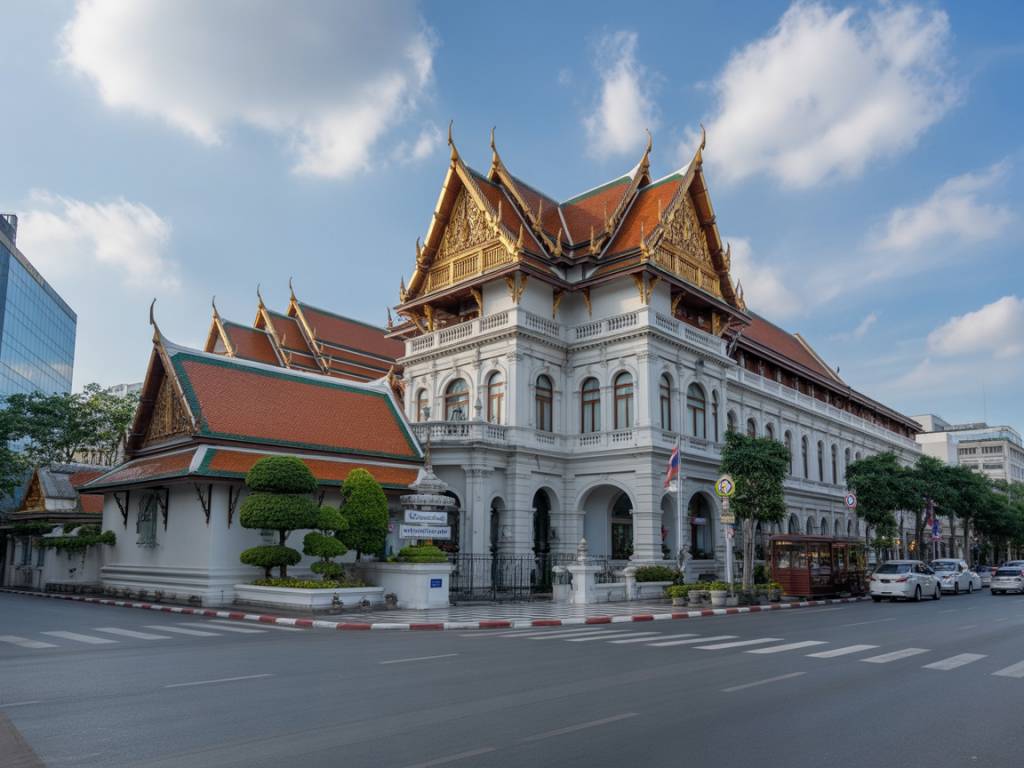
Bangkok has a way of getting under your skin. The hiss of wok-fried noodles at midnight, the tangle of tuk-tuks at an intersection, the golden flash of a temple roof glimpsed between concrete towers… It is a city that never quite sits still, yet always finds a way to welcome you in.
And if there’s one misconception I hear over and over again, it is this: to stay somewhere stylish and comfortable in Bangkok, you have to splurge on a high-end hotel. You really don’t.
Some of the most charming, design-forward places I’ve stayed in Bangkok were officially “only” three stars — yet they had everything I needed: character, calm air-conditioning, a good mattress, and a price tag that left plenty of room for another plate of mango sticky rice.
Let’s wander together through the city and explore how to find the best 3-star hotels in Bangkok — those sweet-spot addresses that are both chic and affordable, right in the heart of the action.
Why Bangkok is perfect for stylish 3-star stays
Bangkok is one of those rare cities where mid-range accommodation can feel surprisingly luxurious. The competition is fierce, and independent owners often pour their hearts into design, service, and small details. That’s especially true in the 3-star category.
What can you realistically expect from a good 3-star hotel in Bangkok?
- Air-conditioning that actually cools you down — a non-negotiable in this humid, tropical embrace.
- Comfortable beds with fresh linens and proper pillows (no sad, flat cushions here).
- Good Wi-Fi for planning your temple route… or catching up on your series at night.
- Modern bathrooms — often compact, but usually spotless, with strong water pressure.
- Thoughtful design touches like local art, greenery in the lobby, or a rooftop corner to watch the pink sky melt into night.
Prices vary with season and location, but many stylish 3-star hotels in central Bangkok often fall in the range of £25–£60 per night (roughly 1,200–2,800 THB) for two people, if booked in advance. In return, you get the sweet reassurance of a comfortable nest to escape the chaos outside.
The best areas to stay: pick your Bangkok mood
Before choosing a hotel, think about the kind of trip you want. Bangkok is a mosaic of neighbourhoods, each with its own rhythm and soundtrack.
Sukhumvit: lively, modern, and well-connected
If your idea of a perfect evening includes sky bars, street food, and easy public transport, Sukhumvit is a great bet. This long, sprawling road is stitched with BTS skytrain stations, malls, cafes, and small sois (lanes) hiding unexpected oases.
Here, many 3-star hotels feel almost boutique: slim buildings with clever use of space, soft lighting, and lobbies scented with lemongrass.
What makes Sukhumvit ideal?
- Easy transport: BTS stops like Asok, Nana, Phrom Phong, and Thong Lo connect you to the rest of the city.
- Endless food: From tiny noodle shops to chic brunch spots.
- Nightlife: Rooftop bars, speakeasies, and the colourful chaos the city is known for.
Look for 3-star properties on quiet side streets off Sukhumvit Road. You’ll be close to the action, but not directly on a noisy artery. I still remember one small hotel a short walk from Asok: the lobby filled with potted palms, the soft hum of the air-con, and the receptionist who slipped me a handwritten list of her favourite noodle stalls nearby. That’s the kind of low-key charm you can find here.
Old Town & Khao San: history, temples, and backpacker vibes
If the names Wat Pho, Grand Palace, and Chao Phraya River make your heart beat a little faster, then the Old Town (Rattanakosin) and nearby Khao San area might be your home base.
The streets here feel different: narrower, more lived-in, with creaking wooden shutters and orange-robed monks padding silently at dawn. In the afternoon, the air is warm and lazy, carrying the scent of incense and grilled chicken. And hidden in this historic maze are some wonderfully atmospheric 3-star hotels.
Why stay here?
- Close to the main cultural sights: Perfect if you want to explore temples on foot, especially in the cooler morning hours.
- Riverside walks: Watching ferries glide past as you sip a cold drink.
- Characterful stays: Many hotels are in renovated shophouses or historic buildings, with creaky floors and vintage touches.
You’ll also find “poshtels” (a blend of hostel and boutique hotel), where you can book private en-suite rooms with thoughtful design and communal lounges. Ideal if you enjoy a friendly, social atmosphere but still want your own space.
Silom & Surawong: between business district and night markets
Silom feels like two different cities sewn together. By day, it’s all office towers, tree-lined lanes, and the soft murmur of professionals on their lunch break. By night, the pavements bloom with food stalls, night markets, and neon lights.
For travellers, this area is a practical and surprisingly charming base:
- Lumpini Park is close by, where you can jog around the lake at sunrise, sharing the path with monitor lizards and tai chi practitioners.
- You have both BTS and MRT stations, making it easy to move across Bangkok.
- The 3-star hotel scene here is a mix of sleek minimalism and playful, colourful interiors.
One of my fondest Bangkok mornings was in Silom, waking up in a compact but bright room, drawing the curtains to see the city shrouded in a hazy, golden light. I brewed the complimentary instant coffee (never glamorous, always appreciated), then headed downstairs, where the receptionist pointed me to a nearby stall for the best khao man gai — chicken and rice so simple, so perfect, it almost felt like a hug.
Ari, Phaya Thai & off-the-radar neighbourhoods
If you don’t mind a slightly longer commute to the big sights, consider quieter residential neighbourhoods like Ari or Phaya Thai. These areas are connected by the BTS skytrain but feel more local, with leafy streets, small cafes, and indie boutiques.
Benefits of staying a little further out:
- Better value: Prices for 3-star hotels can drop, and rooms are sometimes larger.
- Local life: Morning markets, schoolchildren in uniforms, and temple courtyards where neighbours gather at dusk.
- Café culture: Ari in particular has become known for its creative coffee shops and relaxed vibe.
It’s lovely to return here after a full day of sensory overload in central Bangkok: stepping off the skytrain into a softer, slower version of the city.
What to look for when booking a 3-star hotel in Bangkok
Once you’ve chosen your area, how do you pick just one hotel? A few details can make a big difference to your stay.
- Distance to BTS or MRT: Ideally, you want to be within a 5–10 minute walk. In the hot season, those extra minutes feel much longer.
- Noise level: Check reviews for comments about street noise, nearby bars, or early-morning markets. If you’re a light sleeper, request a higher floor or a room away from the main road.
- Room size: Many budget-friendly hotels in Bangkok have compact rooms. That’s fine — but if you’re two people with luggage, a few extra square meters can feel luxurious.
- Breakfast options: Some 3-star hotels include simple breakfast buffets; others skip it entirely. Personally, I love wandering to a nearby street stall for rice porridge or Thai iced coffee, but if you prefer a predictable morning routine, choose a place that serves breakfast onsite.
- Design and atmosphere: Even on a budget, you can prioritise style. Look for photos of common areas: is there natural light, plants, or a small rooftop? These spaces become your living room away from home.
- Practical extras: Elevator access (important if you have heavy bags), luggage storage, 24-hour reception, and laundry service or nearby laundromats.
Realistic price expectations (and when to book)
Rooms at stylish 3-star hotels in central Bangkok can fluctuate quite a bit, depending on:
- Season: December to February (cooler, drier months) are usually pricier.
- Day of the week: Weekends near nightlife hubs can go up in price.
- Events and holidays: Songkran (Thai New Year in April) and major festivals see a spike in demand.
As a general guide, if you’re finding well-reviewed, central 3-star hotels in the range of £30–£50 per night for a double room outside peak season, you’re doing very well. Booking 2–3 months ahead usually unlocks better deals, especially if your dates are not flexible.
Small comforts that make a big difference
Sometimes, it’s the little details in a 3-star hotel that stay with you long after you’ve gone home.
Like the cool face towel and welcome drink you’re handed as you step out of a taxi, sticky from the heat. Or the soft yellow glow of a bedside lamp, just bright enough to let you read a final chapter before sleep. The quiet whirr of the air-conditioner as the city below still pulses with life.
Things I always appreciate in Bangkok’s mid-range hotels:
- Good blackout curtains — because the city wakes early, and so do some construction sites.
- Multiple power outlets around the bed, so you don’t have to choose between charging your phone or your camera.
- A small fridge — perfect for cold water, leftover mango sticky rice, or that mysterious bottled drink you picked up at 7-Eleven.
- A kettle and complimentary tea/coffee — not essential in Bangkok, where good drinks are everywhere, but comforting after a long day.
- A desk or small table if you need to work or simply prefer not to balance your travel journal on your knees.
How to balance budget and style
Finding a stylish 3-star stay in Bangkok is often about compromise — but in the best sense of the word. You decide what matters most to you, and let the rest go.
Ask yourself:
- Is location more important than room size?
- Would I rather have a rooftop terrace, or a slightly cheaper rate?
- Am I okay with a simple, no-frills breakfast if the hotel has charm and character?
I’ve happily slept in tiny rooms where the bed took up most of the space, because the hotel had an airy, plant-filled lobby where I could linger in the mornings with my notebook. Other times, I went for something more minimal but loved the short, breezy walk to the BTS each day.
The secret is to see your hotel not just as a place to drop your suitcase, but as a small part of the story you’re writing in Bangkok.
Tips for a smoother stay in Bangkok’s 3-star hotels
A few final practical notes can make your stay feel even more effortless.
- Check the map carefully: “Near BTS” can mean many things. Use satellite view or street view to understand the surroundings — is it a lively area, a tiny back alley, a highway?
- Read recent reviews: Focus on the latest comments, as management and quality can change quickly in busy cities.
- Note check-in times: If you’re arriving on a very early flight, consider booking the night before, or at least ask if early check-in is possible.
- Prepare for the temperature jump: Coming from an icy hotel room into 35°C humidity can be a shock. I like to linger a moment in the lobby, letting my body adjust before stepping out into the street.
- Carry the hotel’s address in Thai: Most hotels provide a card; it’s a lifesaver when hopping into taxis.
And perhaps most importantly: be open to small imperfections. A slightly scuffed wall, a quirky elevator, a shower that takes a minute to warm up — in a city as alive as Bangkok, a little roughness around the edges often comes with the territory. And sometimes, that’s part of the charm.
When night falls and you return to your 3-star hideaway — clothes faintly scented with grilled garlic and exhaust fumes, feet pleasantly tired — you’ll close the door, feel the cool air washing over you, and realise that luxury in Bangkok isn’t always a question of stars. It’s the quiet comfort of knowing that, in this wild, restless city, you’ve found a corner that feels, just for a few nights, like home.