



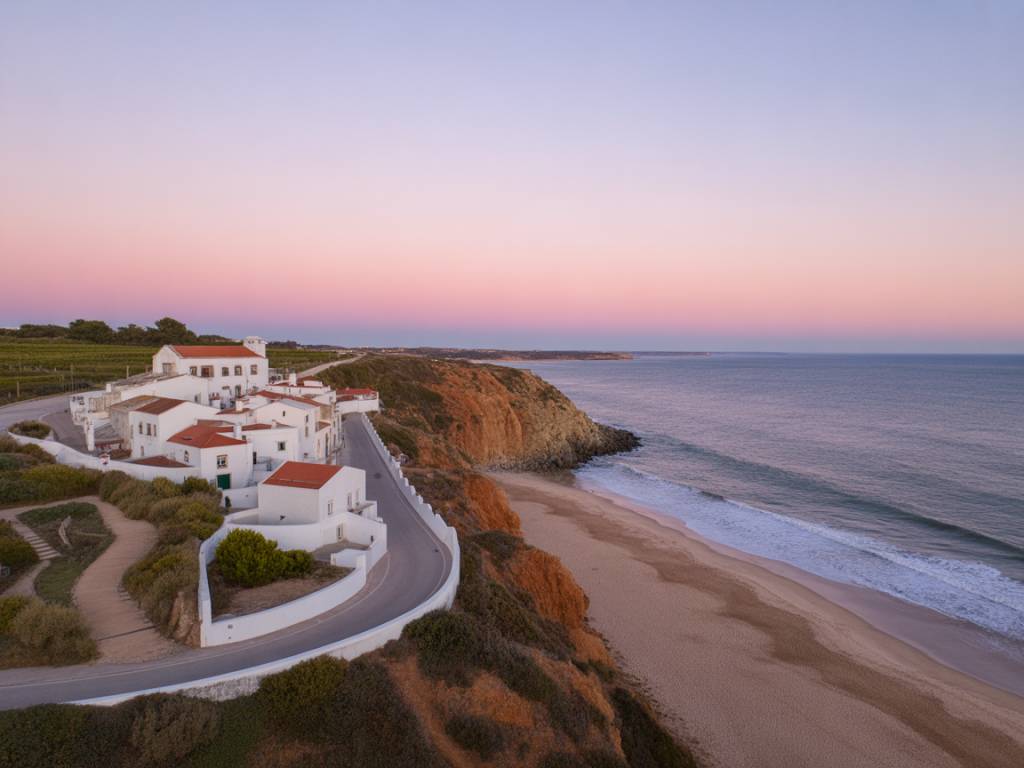
Why the Alentejo Coast is Portugal’s best-kept secret for a road trip
If you’ve fallen for Lisbon’s tiled facades and the Algarve’s golden cliffs, the Alentejo Coast is where you go when you’re ready to slow down, roll down the window and let the Atlantic wind rearrange your plans. This wild stretch between Setúbal and the Algarve feels like Portugal before tourism went big: lonely beaches, whitewashed villages, fishermen mending nets in tiny harbours, and vineyards that burn orange at sunset.
A self-drive trip is absolutely the best way to experience it. Distances are short, traffic is light, and every little detour seems to end at a secret cove, a crumbling fort or a family-run tasca that insists you try “just one more” glass of vinho.
Here’s a detailed, road-tested itinerary to help you plan your own journey along the Alentejo Coast, from windswept dunes to sleepy inland villages and wine country sunsets.
When to go, how long to stay & driving basics
The beauty of the Alentejo is its pace. This is not a place to rush, so I recommend at least 5–7 days for a satisfying coastal road trip.
Best time to visit:
- April–June: Mild temperatures, wildflowers in full bloom, fewer crowds. Ideal for hikers and photographers.
- September–mid-October: Warm sea, long evenings, grape harvest in the vineyards, softer light for sunset drives.
- July–August: Beach-perfect weather, but busier and hotter, especially inland. Book accommodation well in advance.
Driving notes:
- Most roads are quiet and well-maintained; a standard car is enough.
- Gas stations can be sparse on smaller coastal stretches, so refuel before you’re on the last quarter of the tank.
- Parking is generally easy in villages and beaches, often free outside of high summer.
- Respect the speed limits: the temptation to speed on empty straight roads is real, and so are police checks.
Suggested route overview
This itinerary runs roughly north to south along the coast, with a dip inland into wine and cork country:
- Start in Setúbal and the Arrábida Natural Park
- Cross the Sado estuary to the wild Comporta–Troia sandbank
- Follow the coast to Santiago do Cacém and Vila Nova de Milfontes
- Continue down to Zambujeira do Mar and the fishermen’s trail cliffs
- Dip slightly inland to Odemira and the rural heartland
- End near Évora or loop into the Algarve depending on your plans
Setúbal & Arrábida: sea cliffs and secret bays
Setúbal, just over 45 minutes from Lisbon, makes a perfect entry point. It’s a working port city with soul: tiled facades, lively markets and ferries sliding quietly across the Sado estuary.
What to do in and around Setúbal:
- Mercado do Livramento: Start your day among piles of glistening fish and ridiculous mountains of oranges. This is one of Portugal’s most beautiful food markets, a reminder of how tied to the sea this region is.
- Arrábida Natural Park drive: From Setúbal, take the winding N379-1 coastal road into the park. The views of limestone cliffs dropping into an impossibly turquoise sea feel almost Mediterranean. Beware: you will want to stop every five minutes for photos.
- Beaches of Arrábida: Figueirinha, Galapos and Portinho da Arrábida are postcard bays backed by pine-covered hills. In shoulder season, you might share them with just a handful of locals.
Spend at least one night in or near Setúbal. If you can, choose accommodation on the hill with a view over the estuary; watching the sky turn pink behind Troia is the perfect way to ease into Alentejo mode.
Comporta & the Troia peninsula: rice fields and raw Atlantic
From Setúbal, take the ferry (car and passenger) across the Sado estuary to Troia. In just 30 minutes, you emerge on a narrow sand spit with dunes on one side and calm estuary waters on the other.
Highlights along this stretch:
- Troia dunes and boardwalks: Walk the wooden pathways over pale sand dunes, with views back towards Arrábida’s cliffs. Dolphins are sometimes spotted in the estuary, so keep an eye on the water.
- Comporta village: A cluster of white houses, rice fields, stork nests and chic-yet-simple beach restaurants. It has gained a fashionable reputation, but step away from the main buzz and you’ll still find quiet corners where tractors outnumber luxury SUVs.
- Rice fields at golden hour: Drive the small roads between Comporta and Carvalhal just before sunset. The flooded fields turn mirror-like, reflecting the sky in a way photographers dream of.
This is a good place to slow down for a second night, especially if long beach walks and lazy lunches appeal to you.
From Comporta to Santiago do Cacém: cork oaks and rural roads
Leaving the sandbank behind, you start to feel the landscape shift: dunes give way to rolling fields, cork oak forests and little white chapels appearing at unexpected crossroads.
En route stops:
- Melides: A village that feels like a secret—white houses tumbling down a gentle slope towards a lagoon and a wild, wind-battered beach. Stop for a coffee on the main square and watch daily life unfold.
- Cork oak landscapes: Around Grândola and on the backroads to Santiago do Cacém, you’ll find photogenic groves of cork oaks, some freshly stripped of their bark, painted with red numbers that mark the harvest year.
Base yourself for a night near Santiago do Cacém. The town itself is small but atmospheric, crowned by a ruined castle and a Romanesque church with views out across the patchwork countryside.
Vila Nova de Milfontes: river mouth sunsets and relaxed surf vibes
From Santiago, it’s a quick hop back to the sea at Vila Nova de Milfontes, one of the liveliest (yet still laid-back) towns on the Alentejo Coast. It sits at the mouth of the Mira River, where fresh and salt water swirl together under a castle.
Why stay here:
- Beaches for every mood: The sheltered river beach is calm and family-friendly, while across the bridge, Praia do Malhão offers wild Atlantic waves, dunes and plenty of space to spread out.
- Old town wanders: White and blue houses, bright bougainvillea, and viewpoints where you can watch the sun sealing itself behind the horizon in a blaze of orange and pink.
- Food experiences: Look for simple places that grill fresh-caught fish, serve cataplana piled high with shellfish and pour generous glasses of local Alentejo wine.
Vila Nova de Milfontes is also a key stop on the Rota Vicentina, the famous long-distance hiking route that hugs these cliffs. Even if you’re driving, do yourself a favour and walk a short stretch of the coastal path at sunrise or late afternoon. The sense of space is incredible.
Zambujeira do Mar & the wild heart of the Alentejo Coast
Continue south and the coast becomes even more dramatic. You’ll meet fewer cars and more sheep, more fishermen than surfers, and a sense that the land is slowly being reclaimed by wind and salt.
Key spots between Milfontes and Zambujeira:
- Almograve: A quiet village with wide beaches, perfect for a long walk at low tide, when rock pools appear like small universes full of colour and movement.
- Cabo Sardão lighthouse: Park near the lighthouse and walk the cliff path. This is one of the very few places in the world where storks nest directly on sea cliffs. It feels almost impossible until you see them.
Then you arrive at Zambujeira do Mar, perched on its rocky headland. It’s a classic whitewashed Alentejano village with a tiny church overlooking a perfect crescent of sand far below.
What makes Zambujeira special:
- The way the light hits the cliffs in late afternoon, drawing deep shadows that make everything look almost painted.
- The sound of waves echoing up the ravine streets, mixing with café chatter and the clink of beer glasses.
- Clifftop paths in both directions, giving you miles of views over empty, rugged coastline.
Inland to Odemira: white villages and slow rivers
At this point, veer inland a little. The Alentejo is not just a coastline; it’s also about low hills, gentle rivers and villages that seem to have dozed off sometime in the late 19th century and decided to stay that way.
Odemira lies on a looping bend of the Mira River. It’s not a show-stopper at first glance, but it is profoundly, quietly authentic.
Reasons to include Odemira:
- To see a different side of the region, away from the surfboards and sea breeze.
- To drive those small, car-wide roads lined with stone walls, cork trees and occasional herds of goats.
- To simply sit in a café on the main square and notice how slowly time passes when no one is in a hurry.
If you have a passion for rural stays, this is where you seek out an old farmhouse turned guesthouse. Many offer homemade breakfasts with bread from the local bakery, jams from the orchard and honey from hives you probably drove past without noticing.
Vineyards, sunsets and the inland Alentejo detour
From Odemira you can either curl back to the coast or push further inland towards the broader Alentejo plain, where vineyards stretch into the horizon and hilltop towns preside over a landscape of olive groves and cork.
Even a single night near a winery can change the tone of your trip. Late afternoon here is something special: long shadows, the smell of warm earth, the soft clink of glasses on shaded terraces.
Tips for including vineyards in your itinerary:
- Look for estates that offer both tastings and accommodation; it makes enjoying that extra glass much simpler and safer.
- Book ahead, especially during harvest (September–October), when activity is at its peak and rooms are limited.
- Ask about local grape varieties like Aragonez, Trincadeira and Antão Vaz, and don’t be shy about saying you usually drink “this or that”—people here love helping you discover something new.
There is nothing quite like watching the sun sink over a sea of vines after a day of coastal roads. The light turns almost syrupy, and for a moment the whole world feels painted in shades of amber and plum.
Practical tips to make your Alentejo road trip unforgettable
A few final pointers to keep your journey smooth, spontaneous and full of the kind of moments that stay with you long after you’re back home.
- Plan loosely: Book your key overnight stops (especially in July–August), but leave space in your days for unplanned beach stops and scenic detours.
- Pack light layers: Coastal breezes can be fresh even in summer evenings. A light jacket and scarf go a long way.
- Beach essentials: A good hat, high SPF sunscreen, a reusable water bottle and sandals that can handle both sand and rocky paths.
- Cash and cards: Most places accept cards, but a small stash of cash is handy for tiny cafés, roadside produce stalls and parking honesty boxes.
- Language: English is widely understood in tourism spots, less so in deeper rural areas. A few Portuguese words and a smile open many doors.
- Respect the rhythm: Things open late, close for lunch, and evenings start later than you might be used to. Embrace it: this slower pace is part of the region’s charm.
Driving Portugal’s Alentejo Coast is less about ticking off sights and more about stringing together small moments: an empty beach you find by accident, the first sip of a crisp white wine after a hot day, a conversation with a restaurant owner who insists you try their grandmother’s recipe. The wild beaches, white villages and vineyard sunsets are all here, waiting—your only real task is to give yourself enough time to let them sink in.