


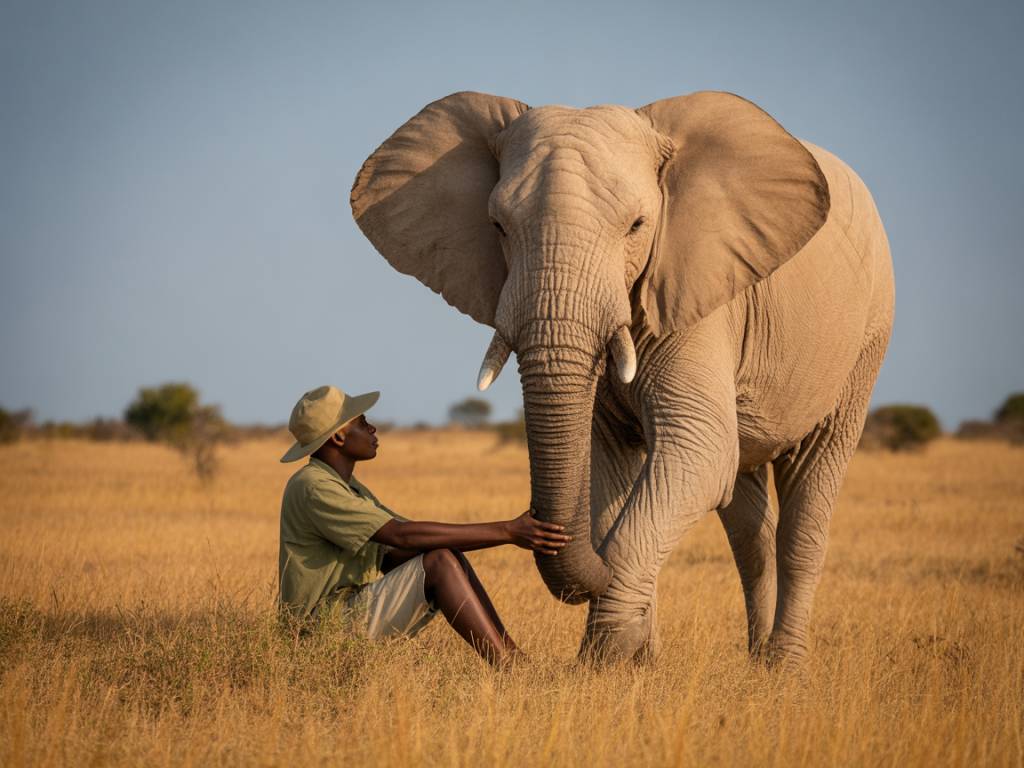
Africa gets under your skin before you even pack your bag. It starts with a name on a map — Serengeti, Okavango, Kruger — and before long you’re falling asleep to imagined lion roars and waking up reaching for a non-existent pair of binoculars. I’ve been lucky enough to experience Africa and safari travel across several countries, and what I can tell you is this: no documentary, no photograph, no secondhand story comes close to the raw, living reality of it. This article brings you three of my most vivid wildlife encounters, followed by everything you need to plan your own safari — destination, timing, style and responsible travel.
Africa and safari: three encounters that changed how I see the world
Waking up with lions in Kenya’s Maasai Mara
My alarm that morning wasn’t a phone. It was the low, chest-deep rumble of a lion’s roar rolling across the Kenyan plains, vibrating through the canvas walls of my tent like thunder with a heartbeat. We were out before sunrise, thermoses in hand, fingers stinging in the cold air, the sky barely lilac at the edges.
We found them minutes later: a pride of nine lions draped across a low rise like scattered gold coins. Cubs wrestled clumsily, pouncing on each other and tumbling over their mother’s paws. Every now and then one would stop, fix us with amber eyes, then shrug us off and return to its game. The adults barely registered our Land Rover — to them, it was just another shape on the horizon.
What stays with me isn’t the famous roar. It’s the softer sounds: cubs mewing, a lioness chuffing gently at her young, the faint tearing sound as a male finished the last of a wildebeest kill hidden in the grass. That morning taught me the first lesson of safari travel: you are a guest in a world that existed long before you arrived and will continue long after you’ve boarded your flight home.
Elephants and silence in Botswana’s Okavango Delta
If the Maasai Mara is open-air theatre, the Okavango Delta is a whispered secret. Water channels thread through papyrus and reeds, creating a mosaic of lagoons, floodplains and palm-fringed islands where life gathers in quiet abundance. My guide suggested we swap the 4×4 for a mokoro — a traditional dugout canoe — and push out into the stillness.
The water was mirror-flat, broken only by the gentle push of the pole. Dragonflies hovered like tiny stained-glass windows above the surface. We rounded a bend and found a family of elephants at the water’s edge: a young one testing the river’s depth with exaggerated caution, while the matriarch watched us with a steady, unhurried gaze, every crease of her sun-baked skin visible from fifteen metres away.
She flared her ears slightly — not in aggression, but in assessment. We kept still. The world narrowed to the soft plop of water, the wet sound of trunks scooping and spraying, and the low, almost inaudible rumbles of elephant conversation. No engines, no crowd of vehicles, no commentary. Just two species carefully observing one another across a strip of copper-coloured water.
Tracking white rhinos on foot in South Africa
Some encounters aren’t about numbers. They’re about the gravity of a single presence. In a private reserve bordering Kruger National Park, we went out on foot with a ranger and a tracker at first light — cool air, crushed grass, wild basil underfoot. The tracker read the ground like a map: a broken twig here, a fresh dung midden there, the faint press of a three-toed print in red dust.
When we finally found the white rhino, he was standing alone in a clearing, head lowered, a living relic draped in grey armour. We stopped. No one spoke. He lifted his head and the morning light caught the curve of his horn, and something caught in my throat — this animal, perfectly evolved over millions of years, now pushed to the edge of existence by poaching and superstition.
That moment reframed everything I thought a safari was. It isn’t about ticking off the Big Five. It’s about making a quiet, private promise to leave these animals and their landscapes a little better protected than you found them.
Choosing your Africa safari destination
Africa covers more than 30 million square kilometres and contains extraordinary safari diversity. The right destination depends on what you want to see, how you like to travel, and your budget. Here are the main options to consider:
- Kenya & Tanzania (East Africa) – Classic savannah landscapes, excellent big cat sightings year-round, and the famous Great Migration (peak: July–October in the Maasai Mara). Ideal for first-timers who want iconic imagery and well-established camps.
- South Africa – Superb infrastructure, highly trained guides, and options ranging from budget to ultra-luxury. Kruger and its private reserves offer malaria-free options. Easy to combine with Cape Town or the Garden Route.
- Botswana – Low-volume, high-quality tourism with a strong conservation ethos. The Okavango Delta, Chobe (one of Africa’s highest elephant densities) and the Central Kalahari offer seclusion and exceptional game viewing. Budget accordingly — this is a premium destination.
- Namibia – Otherworldly: red dunes, Skeleton Coast desert, and desert-adapted lions, elephants and rhinos. Safaris here are about space, silence and surreal beauty as much as animal sightings.
- Uganda & Rwanda – Essential for primate lovers. Gorilla trekking permits cost around $700–$1,500 per person but deliver one of the most profound wildlife experiences on the planet. Uganda also offers classic savannah parks like Queen Elizabeth and Murchison Falls.
Before you book, ask yourself:
- Do I want the classic lion-on-the-savannah experience, or something more unusual?
- Is the Big Five my priority, or am I equally excited by birds, primates and rare ecosystems?
- Am I comfortable with remote fly-in camps, or do I prefer shorter transfers and urban connections?
When to go: seasons, migrations and timing
Timing your Africa safari well can dramatically improve your experience. Counterintuitively, the lush green months aren’t always the best for wildlife viewing.
- Dry season (roughly May–October) – Vegetation thins, animals concentrate around waterholes, and sightings are more frequent and closer. This is peak season in most regions: sunny days, cool nights, and optimal photography conditions.
- Green / wet season (roughly November–April) – Landscapes transform into vivid emerald. Rates at many lodges drop by 20–40%. Outstanding birdwatching, newborn animals, and dramatic skies. Roads can be challenging, and thick vegetation makes spotting cats harder.
Key seasonal highlights to plan around:
- Great Migration river crossings (Kenya/Tanzania) – Most dramatic July–October in the Maasai Mara, when wildebeest cross the crocodile-filled Mara River. The migration itself is a year-round cycle across the Serengeti ecosystem.
- Okavango Delta flooding (Botswana) – Peak water levels June–August, perfect for mokoro excursions and wildlife concentrated on islands.
- Whale sharks off Mozambique/Tanzania – November–February for snorkelling alongside the world’s largest fish.
- Gorilla trekking (Uganda/Rwanda) – Possible year-round, but June–September and December–February are generally drier and easier underfoot.
What type of safari suits you?
Not all safaris look the same — and that’s a good thing. Matching the format to your travel style makes all the difference.
- Classic game drive – Morning and evening drives in an open 4×4, led by a qualified guide. The most common format; suitable for all ages and fitness levels.
- Walking safari – The most intimate way to experience the bush. You read tracks, identify insects, smell the landscape. Usually offered as a complement to game drives in South Africa, Zimbabwe and Zambia.
- Fly-in safari – Small charter planes connect remote camps across Botswana, Tanzania or Zambia with no long road transfers. Expensive, but an efficient way to cover multiple ecosystems in a short trip.
- Self-drive safari – Particularly popular in South Africa (Kruger) and Namibia. More freedom, lower cost, and a deep sense of personal discovery. Requires research and confidence on gravel roads.
- Mobile camping safari – Moving camps follow the wildlife and the seasons. A more adventurous, immersive experience with a smaller environmental footprint.
How to travel responsibly on safari
Africa’s wild spaces are fragile, and the tourism industry has a direct impact — for better or worse — on their survival. A few principles worth committing to before you go:
- Choose lodges and operators with genuine conservation credentials — look for community benefit programmes, anti-poaching partnerships or wildlife corridor funding.
- Stay on designated tracks — off-road driving destroys vegetation and soil structure, with lasting damage to the very landscapes you came to see.
- Keep a respectful distance — follow your guide’s lead. Approaching animals too closely disrupts natural behaviour and can be dangerous.
- Avoid wildlife experiences that involve handling or performing animals — walking with lions, petting cheetahs and cub interactions are widely associated with captive breeding and the canned hunting industry.
- Spend locally — eat at local restaurants, buy crafts directly from artisans, and tip guides and camp staff generously. Safari economies sustain communities who, in turn, protect wildlife.
Africa and safari travel at its best is a two-way exchange: you leave with memories that reshape how you see the world, and the places you visit benefit from your presence. That balance — getting it right — is what turns a holiday into something that actually matters.