



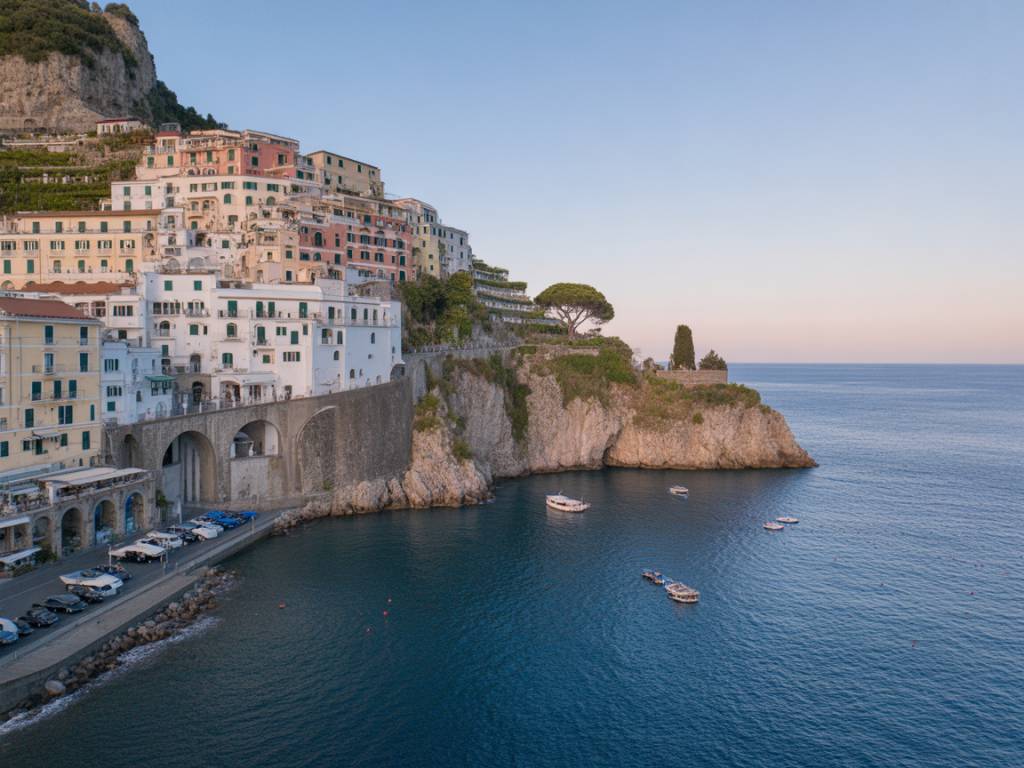
The first time I saw the Amalfi Coast, it was from the window of a bus that was slightly too fast for the cliffside road it was following. Below, the sea stretched like a sheet of blue silk, crumpled here and there by the wake of tiny white boats. Lemon trees clung to terraces impossibly steep, and villages tumbled down the cliffs in cascades of pastel houses. It felt unreal, almost staged — and yet, it was very real, with laundry fluttering from balconies and the smell of espresso drifting up from hidden cafés.
Planning a trip to this slice of Italian coastline can feel just as dizzying as those roads. Packages, passes, excursions, transfers… How do you choose an itinerary that matches your rhythm, rather than spending your days racing from bus stop to ferry pier?
Let’s explore how to pick an Amalfi Coast travel package that suits your style — especially if your dream is to wander through cliffside villages, linger over long lunches, and let the sea breeze set the tempo.
Understanding What “Amalfi Coast Packages” Really Include
Before looking at the glossy photos, it helps to understand what’s actually behind most Amalfi Coast packages. In general, you’ll find a mix of these elements:
- Accommodation: Hotels, boutique guesthouses, or apartments in one or several villages.
- Transportation: Airport transfers, ferry passes, private drivers, or guided bus tours.
- Activities: Boat trips, cooking classes, winery visits, guided hikes, or day tours to Capri and Pompeii.
- Meals: Breakfast is often included; some packages add a few dinners or tasting experiences.
The key is not to choose the package with the longest list of inclusions, but the one that fits the way you like to travel. Do you want every hour planned, or plenty of empty space on the calendar for spontaneous swims and gelato breaks?
As you read descriptions, ask yourself two questions:
- “Will this pace allow me to actually feel the places I’m visiting?”
- “Is this built around my priorities, or around what’s easiest for a tour operator?”
Choosing Your Home Base: Which Cliffside Village Is “You”?
Most Amalfi itineraries are built around one or two main bases. Each village has a distinct personality — a bit like choosing between quiet poetry and a lively opera. Here’s how to decide where to anchor your stay.
Positano: For Postcard Views and Glamour
Positano is the classic image you’ve seen a thousand times: a pyramid of sherbet-colored houses spilling down to a pebbled beach, bougainvillea tumbling over balconies, boutiques lined with linen dresses and straw hats.
- Best for: Romantic getaways, honeymoon-style trips, travelers who love a buzz of activity.
- Vibe: Chic, busy, undeniably beautiful — but often crowded and pricey in peak season.
- Pros in a package: Easy boat connections, dramatic views from many hotels, plenty of dining choices within walking distance.
- Watch out for: Lots of stairs and steep walks. If a package says “Positano area,” double-check the actual location; “area” can mean a hilltop far above the center.
Amalfi: For a Central, Lively Base
Amalfi town itself feels like a small, sun-drenched stage set. The cathedral steps are a natural gathering point, voices echo in narrow alleys, and the harbor is busy with ferries slipping in and out.
- Best for: First-timers who want a central base with good connections to other villages.
- Vibe: Historic, energetic, a little less glamorous than Positano but more down-to-earth.
- Pros in a package: Excellent bus and ferry links, easy day trips to Ravello, Positano, Capri.
- Watch out for: It can be busy with day-trippers; look for packages that allow early morning or evening time when the crowds thin out.
Ravello: For Quiet Elegance and Garden Lovers
Perched high above the sea, Ravello doesn’t cling to cliffs so much as float above them. Here, the soundtrack is softer: church bells, rustling cypress trees, the distant murmur of the sea far below. The views from Villa Cimbrone and Villa Rufolo feel almost unreal, a meeting point between sky and water.
- Best for: Travelers seeking calm, couples who enjoy long, lazy evenings and refined surroundings.
- Vibe: Elegant, peaceful, slightly aristocratic. Less nightlife, more sunset contemplation.
- Pros in a package: Ideal for “slow travel” stays; great as a quieter second base after a few nights in Amalfi or Positano.
- Watch out for: No beach access; you’ll rely on transfers down to the coastal towns if you want a swim.
Praiano and Other Smaller Villages: For Local Charm
If your idea of a perfect evening is a glass of local wine on a terrace, listening to neighbors chat in Italian below, you might feel at home in quieter spots like Praiano, Minori, or Atrani.
- Best for: Travelers who like a local feel and don’t mind planning their own day trips.
- Vibe: Sleepier, more residential, often with more reasonably priced stays.
- Pros in a package: A great way to escape the rush while still being close enough for day excursions.
- Watch out for: Fewer evening options; check that your package includes transport if you’ll be exploring frequently.
Sorrento: Technically Not Amalfi Coast… But Very Practical
Sorrento isn’t on the Amalfi Coast proper, but many itineraries start or end here. Perched above the Bay of Naples, it’s a transport hub and a lively town with plenty of restaurants and shops.
- Best for: Travelers combining the Amalfi Coast with Pompeii, Herculaneum, or Naples.
- Vibe: Larger and less vertical than the cliffside villages, with a “small city” feel.
- Pros in a package: Often more budget-friendly; great for short stays or as a gateway.
- Watch out for: Longer travel times to some Amalfi villages; if your dream is waking up right above the sea cliffs, this may feel like a compromise.
Choosing the Right Style of Package for You
Once you know where you’d like to stay, the next step is to choose how you want to experience the coast. Here are the most common package styles, and who they’re best for.
- Hub-and-spoke stays: You sleep in one village for the entire trip and take day trips. Ideal if you hate packing and unpacking every two days.
- Multi-base itineraries: You spend 2–3 nights in each of two or three villages. Great for tasting different atmospheres, but make sure transfers between them are included.
- Small-group tours: A guide and a set itinerary with a few free hours each day. Good for travelers who prefer not to navigate local transport alone.
- Private or tailor-made packages: Fully customized routes with a driver, flexible timings, and bespoke activities. Best for special trips where comfort and personalization matter more than budget.
Ask yourself how confident you feel with bus timetables, ferry schedules, and steep alleys. If that makes your head spin, a package with included transfers and at least a few guided days can be a blessing.
Three Sample Itineraries for Dreamy Cliffside Villages
To help you imagine what’s possible, here are three example structures you can look for — or ask a travel designer to recreate.
Romantic Slow-Travel Escape (6–7 Days)
- Base: 4 nights in Positano, 2–3 nights in Ravello.
- Inclusions to look for:
- Private transfer from Naples airport or station to Positano.
- Welcome dinner on a terrace overlooking the sea.
- One half-day private boat tour along the coast, with time to swim in hidden coves.
- Transfer to Ravello with a stop in Amalfi town.
- Garden passes or a guided visit of Villa Cimbrone and Villa Rufolo.
These itineraries work best with plenty of free time. Mornings spent drifting between café and beach, afternoons lost in a book by the pool, evenings watching the light fade over the water: that’s where the real magic happens.
Active Explorer Route (7–8 Days)
- Base: 4 nights in Amalfi, 3–4 nights in Praiano or Positano.
- Inclusions to look for:
- Guided hike on the Path of the Gods (Sentiero degli Dei).
- Day trip to Capri with time to explore Anacapri’s quieter corners.
- Optional excursion to Pompeii or Mount Vesuvius.
- Local transport passes (ferries or buses) so you can move freely.
If you choose this style of package, check the level of difficulty for hikes and how flexible timings are. The Path of the Gods on a clear day, with the coast unfurling beneath you, is something you don’t want to rush.
Family-Friendly Coastal Adventure (5–7 Days)
- Base: Sorrento or Amalfi, with optional 2 nights in a quieter village.
- Inclusions to look for:
- Central accommodation with easy beach or pool access.
- Gentle boat trips rather than long hikes.
- Flexible free days for rest (children have their own pace).
- Possibly a pizza-making or gelato workshop.
When reading package descriptions, scan for words like “leisurely,” “family-friendly,” or “flexible.” Children rarely enjoy being marched from monument to monument — but they’ll remember the taste of a just-baked margherita pizza forever.
Questions to Ask Before Booking Any Package
Even the most beautiful photos can hide some practical surprises. Before you commit, don’t hesitate to ask very specific questions. A good provider will answer clearly.
- Where exactly is the hotel located? In the town center, up many stairs, or in a nearby hamlet? How long does it take to walk to restaurants or the beach?
- How are transfers handled? Are ferries, buses, or private drivers included between villages and to/from the airport?
- How much free time will I have? Is there at least one full unscheduled day for you to wander at your own pace?
- What is the group size? For tours, this changes everything: a 10-person group feels very different from 40.
- What happens if the weather turns? Are boat trips or outdoor experiences refundable or flexible if the sea is rough or rain appears?
Think of your questions as a way to test the ethos behind the package. Is this about ticking off sights, or helping you connect with the soul of the coast?
Timing Your Trip: Crowds, Light, and Budget
The atmosphere of the Amalfi Coast shifts dramatically with the seasons — and so do prices.
- High season (June–August): Long, warm days and lively evenings. Ideal for swimming, but villages are crowded and prices peak. Choose packages that build in early-morning or late-evening experiences, when the streets are quieter.
- Shoulder season (May, September, early October): Often the sweet spot. The sea is still inviting, the light softens, and there’s a little more breathing room in the alleys. Many travelers find this the most rewarding time to come.
- Low season (late October–April): Some hotels and restaurants close, and ferry schedules thin out. However, if your dream is misty views, empty churches, and long walks, a well-designed off-season package can be incredibly atmospheric — and kinder to your budget.
When comparing prices, look beyond the headline figure. A more expensive package that includes airport transfers, several boat trips, and central accommodation might end up cheaper than a “bare-bones” deal once you add extras.
What to Skip (So You Can Truly Enjoy What Matters)
There is one trap many Amalfi Coast itineraries fall into: trying to do everything. Capri, Positano, Amalfi, Ravello, Pompeii, Sorrento, Naples… all in four or five days. On paper, it looks efficient. In real life, it can feel like a marathon.
When you review a package, look out for:
- Too many destinations in too little time: More than two overnight bases in a week is often tiring.
- Multiple long day trips in a row: Alternate “busy days” with gentler ones.
- Very short stops: An hour in Ravello, for example, barely allows a stroll, let alone a peaceful moment in the gardens.
Sometimes, the most luxurious thing you can give yourself is the freedom to do less. To linger over a plate of seafood pasta in a tiny trattoria; to pause on a staircase just to feel the cool stone under your hand; to stand at a viewpoint in Ravello until the sky turns from gold to indigo.
Crafting Your Own Dreamy Cliffside Story
In the end, the right Amalfi Coast package is the one that tells a story you want to inhabit. Maybe it’s the story of two people celebrating something important, wandering hand-in-hand along flowered lanes. Maybe it’s a solo adventure, you and a notebook on a terrace above the sea. Maybe it’s a family memory-in-the-making, children chasing waves beneath steep, pastel façades.
As you browse options, keep a few things close:
- A clear sense of your preferred pace — slow, medium, or “see it all.”
- One or two key priorities (a boat trip at sunset, a visit to Capri, a hike above the cliffs).
- An openness to being surprised: by a quiet piazza, a lemon grove fragrant after rain, or a conversation with a local on a bus that winds its way along those unforgettable roads.
The Amalfi Coast doesn’t need a packed schedule to be unforgettable. It simply needs time: time to watch the light change on the water, to follow the smell of espresso into a hidden café, to listen to the soft clink of cutlery and the hum of conversations in the warm evening air.
Choose a package that gives you that time — and the coast will do the rest.