



From Temples to Tropics: Why Cambodia Belongs on Your Travel Radar
There are journeys that baffle your sense of time. Cambodia is one of them. One moment you’re watching the first light of day caress the stones of Angkor Wat, listening to monks chanting somewhere out of sight. A few days later, you’re barefoot on a powdery beach in the south, the sky fading to tangerine as fishing boats return in silence. Same country, same trip, and yet it feels like two different worlds stitched together by one gentle thread: the Cambodians’ quiet, unwavering warmth.
If you’re dreaming of a vacation package that combines ancient temples, vibrant cities and secret islands, Cambodia is that rare gem that still feels a bit under the radar. Let’s sketch out a journey: from sunrise at Angkor to the sleepy islands of the south, with plenty of fragrant street food, lotus-filled lakes and swaying palms in between.
Angkor at Sunrise: The Moment That Changes Everything
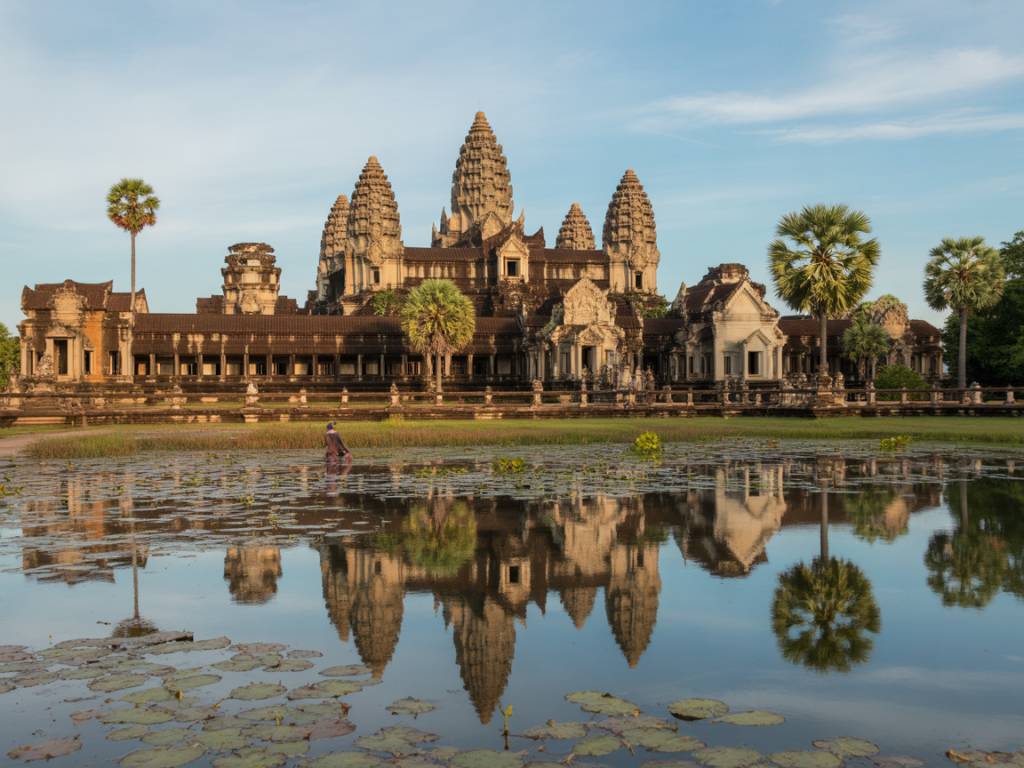
Your alarm rings at an hour that should be illegal on holiday. Outside, Siem Reap is still half-asleep, the air soft and slightly cool. A tuk-tuk rattles through the dark, headlights sweeping across palm trees and roadside shrines. Then, suddenly, there it is: the silhouette of Angkor Wat, all towers and reflection, standing guard over the water.
This is the scene that anchors most Cambodia vacation packages, and for good reason. Angkor Wat at sunrise is less a photo opportunity than an initiation. The sky begins as a faint bruise of purple, slowly dipping itself into pink, orange, then gold. Frogs croak. Cameras click. Somewhere nearby, incense curls up from a small altar, the scent of jasmine lingering in the damp morning air.
To make the most of it:
- Arrive early: Your driver will likely pick you up around 4:30–5:00 am. It sounds brutal, but the quieter pre-dawn hour is magical.
- Walk a little farther: Most people crowd around the main pond. Slip to the sides for calmer corners and more space to breathe.
- Stay after sunrise: As the tour groups rush off, linger. The temple empties out, and the colonnades echo with your footsteps alone.
Inside, the bas-reliefs come alive as the light grows stronger: warriors, celestial dancers, mythic battles carved into stone with a precision that still feels impossibly fresh. Run your fingers (gently) along the ancient walls, and you can almost feel the centuries humming beneath your hand.
Beyond Angkor Wat: Temples Lost in the Jungle
Angkor Wat may be the star, but the surrounding temples are where many travellers quietly fall in love with Cambodia. Each has its own personality, like characters in a novel you can’t put down.
There’s Ta Prohm, where strangler fig roots coil around stones like frozen waterfalls. Morning is best here, when the light filters through the foliage in thin, pale shafts and the air still smells of damp earth after the night. In the distance, a bird calls; somewhere closer, a cicada buzzes to life. You stand in a doorway engulfed by roots and think, just for a moment, that the jungle is reclaiming everything.
Then there’s Bayon, the temple of a thousand faces. Climb its narrow steps and you find yourself surrounded by serene stone smiles, each one slightly different. It’s strangely intimate, as if these ancient visages are quietly watching your every move. I remember standing there, nose-to-nose with one of these faces, the smell of warm stone and dust in the air, and feeling an almost childlike awe.
A well-designed vacation package will usually include:
- Angkor Wat at sunrise plus a second, quieter visit later in the day.
- Ta Prohm and Bayon, often combined with Angkor Thom’s gates and terraces.
- A “small circuit” and “grand circuit” of lesser-known temples for a fuller impression of the ancient city.
If you can, add one more stop: Banteay Srei, a little farther afield. Its pink sandstone glows in the afternoon light, and the carvings are so fine that you almost expect them to soften under your gaze.
Siem Reap: More Than a Temple Gateway
Between dawn pilgrimages and sunset explorations, Siem Reap itself deserves your attention. The town is small enough to feel cosy, but lively enough to keep you busy for days.
In the late afternoon, when the heat eases, stroll along the river. The water is calm and brown, the banks dotted with small shrines and bicycles propped lazily against trees. Cafés begin to fill with travellers comparing temple impressions over iced coffee, the air carrying a mild blend of espresso and grilled skewers from nearby food stalls.
Consider weaving these experiences into your stay:
- Phare, the Cambodian Circus: Acrobatics and storytelling with heart, run by a social enterprise. You’ll laugh, hold your breath, maybe shed a discreet tear.
- Street food explorations: From peppery lok lak to fragrant amok served in banana leaves, Siem Reap’s food scene is a gentle initiation into Cambodian flavours.
- Artisan workshops: Silk weaving, stone carving, lacquer work—many projects here support rural communities and help revive traditional crafts.
Most Cambodia vacation packages pair guided temple days with free evenings in town, so you can follow your nose to a rooftop bar or a quiet garden restaurant lit with lanterns.
Phnom Penh: Between Memory and Mekong Light
From Siem Reap, you can fly or drive to Phnom Penh, a capital that is both raw and deeply human. The journey itself—especially by road—shows another side of Cambodia: rice paddies shimmering under the sun, water buffalo ankle-deep in mud, children waving at your passing minivan as if you were on a parade float.
Phnom Penh greets you with motorbikes weaving like schools of fish and the scent of grilled corn, exhaust and incense mingling in the warm air. At dusk, the Mekong turns to liquid silver, and locals gather along the riverfront to exercise, flirt, snack, or simply sit and watch the day dissolve.
A thoughtful itinerary often includes:
- The Royal Palace and Silver Pagoda: Golden roofs, manicured gardens, and a cool hush in the temple interiors.
- Central Market (Phsar Thmei): An Art Deco dome sheltering stalls of jewellery, spices, textiles and everyday life.
- Sites of memory: Tuol Sleng (S-21) and the Killing Fields, essential for understanding Cambodia’s recent history.
These last visits are not easy, but they matter. Most travellers emerge quieter, more reflective, with a deeper respect for the resilience of the people they meet afterwards—the tuk-tuk driver cracking jokes, the vendor carefully packing your mango slices, the hotel staff teaching you a few words of Khmer between check-ins.
Southbound: Pepper Fields, Crumbling Villas and a Taste of the Sea
As you leave Phnom Penh and follow the road south, the landscape flattens, then swells gently into low hills. This is the gateway to Cambodia’s lesser-known coastal region, where the tempo slows and the air grows thick with salt and soil.
In Kampot, the river glides lazily past French colonial façades, their paint peeling in charming shades of turquoise, ochre and faded white. In the late afternoon, the light turns honey-soft and the air smells faintly of grilled seafood and woodsmoke. Boats drift by, and at some point you realise your shoulders have dropped several centimetres.
Nearby, pepper plantations stretch out in neat, fragrant rows. Kampot pepper is subtle and floral, the sort of spice that changes a dish with just a few grains. Walking through the fields, you crush a leaf between your fingers; the scent rises—green, peppery, almost citrusy—and lingers long after you’ve rinsed your hands.
Further along the coast lies Kep, once a glamorous seaside escape, now a sleepy town where time feels pleasantly off-duty. The crab market is the star here: stalls piled high with glistening crabs, tossed into boiling pots and served minutes later with Kampot pepper and lime. You eat with your fingers, juice running down your wrists, the ocean at your back and a chorus of seagulls above.
Secret Islands in the South: Your Private Piece of Paradise
From the mainland, the horizon is dotted with dark green shapes floating on the blue. These are Cambodia’s southern islands, quiet neighbours of Thailand’s more famous shores. Many vacation packages now include a few nights here at the end of the trip—a gentle exhale after the intensity of temples and cities.
Most boats depart from Sihanoukville, but it’s really just a stepping stone to somewhere much gentler.
On Koh Rong, long arcs of white sand meet clear, turquoise water that looks suspiciously like the images from your computer screensaver. Walk a little, and you escape the livelier stretches into almost deserted bays where the loudest sound is the swish of the tide and the distant hum of a boat engine.
If you prefer fewer people and more hammock time, Koh Rong Sanloem is a favourite. Wooden bungalows tucked among the trees, a path of soft sand between you and the water, and just enough infrastructure to get your morning coffee without losing the castaway feeling. At night, if you slip into the water away from the lights, you might see bioluminescent plankton shimmer around your hands like a trail of tiny stars.
More offbeat still are smaller islands like Koh Ta Kiev, where life unfolds in slow motion. The days here are measured not in activities but in tides, meals and the angle of the sun on your porch. The air tastes faintly of salt and grilled fish; the soundtrack is wind in the trees and the occasional thud of a coconut dropping somewhere out of sight.
Designing a Cambodia Vacation Package: A Sample Itinerary
How do you weave all these moments into one coherent trip? This kind of route works beautifully for a first visit, and many tour operators or local agencies can adapt it to your rhythm:
- Days 1–4: Siem Reap and Angkor
Arrival in Siem Reap, soft landing by the pool or in a café. The next days include sunrise at Angkor Wat, visits to Ta Prohm, Bayon and lesser-known temples, with free evenings for markets, massages and dinner by candlelight. One afternoon could be devoted to a floating village on the Tonlé Sap Lake, where houses rest on stilts and the horizon is nothing but water and sky. - Days 5–6: Phnom Penh
Travel by road or plane, then explore the Royal Palace, riverside promenade and markets, with a day set aside for historical visits. Evenings bring sunset cruises on the Mekong or simply people-watching from a café terrace. - Days 7–8: Kampot and Kep
Head south to Kampot, visit pepper plantations, stroll along the river and maybe take a boat at sunset. A side-trip to Kep for fresh crab and a wander along the quiet beach rounds out your coastal introduction. - Days 9–12: Island escape
Boat transfer to Koh Rong or Koh Rong Sanloem. Days dedicated to doing very little: reading, snorkelling, kayaking at dawn, or just floating in the warm water. Return to the mainland and connect back to Phnom Penh for your flight home.
A curated vacation package will typically include all transfers (no need to negotiate last-minute tuk-tuk fares), handpicked local guides for the key sites, and hotels chosen not just for comfort but for character—perhaps a restored shophouse in Phnom Penh, a leafy boutique hotel in Siem Reap, and a bungalow within earshot of the waves on the islands.
Practical Tips: When to Go, What to Expect, How to Prepare
Cambodia is surprisingly easy to fold into your travel plans once you know a few basics.
- Best time to visit: The dry season runs roughly from November to April. December to February offers the most pleasant temperatures and clearer skies for that iconic Angkor sunrise. The green season (May to October) brings brief, intense showers and lush landscapes, plus fewer crowds.
- Budget: While prices vary with comfort level, Cambodia remains relatively affordable. Street food is inexpensive and delicious; boutique hotels often offer excellent value. Vacation packages can help you control costs upfront by bundling accommodation, guides and transport.
- Visa and entry: Many nationalities can obtain a visa on arrival or apply for an e-visa. Always check the latest entry requirements before you travel, as rules can change.
- Health and comfort: It’s hot and humid for most of the year. Light, breathable clothing, a hat, sunscreen and a refillable water bottle are essential. For temple days, dress modestly (shoulders and knees covered) and wear comfortable shoes for clambering over stones.
- Respectful travel: Cambodians are generally gentle and reserved. A light bow, a smile and a simple “Arkun” (thank you) go a long way. At temples, move quietly, remove hats, and be especially mindful around monks and religious ceremonies.
- Connectivity and language: English is widely spoken in touristic areas, and most hotels and cafés offer Wi-Fi. Learning a few Khmer greetings will nonetheless earn you bright, surprised smiles.
Why Cambodia Stays With You Long After the Flight Home
When you think back to your time in Cambodia, it’s rarely just one postcard moment that returns. It’s the way the morning air felt cool and slightly sweet as you waited for the first line of light over Angkor. It’s the soft surrender of sand under your bare feet on an empty beach, the turquoise water licking your ankles. It’s the vendor who added an extra slice of mango “for luck”, the monk who paused to chat in hesitant English, the pepper farmer proudly offering a pinch of his harvest for you to taste.
A well-crafted Cambodia vacation package doesn’t just check off the icons; it strings together big and small experiences into a journey that feels almost like a story written just for you. From the hush of ancient stones to the murmur of the tide on the southern islands, you move through time and space, carried gently by the kindness of strangers and the quiet beauty of everyday scenes.
When you finally leave, the plane lifts off and the patchwork of rice fields drifts away beneath the clouds. You close your eyes and, for a brief instant, you hear again the distant temple bells at dawn, see the gold flare over Angkor’s towers, feel the warm sea cradle you as if you had always belonged there. And you know, quietly and quite certainly, that this is not goodbye—just a pause before the next chapter.