


Why France Is Perfect For A Cycling Holiday
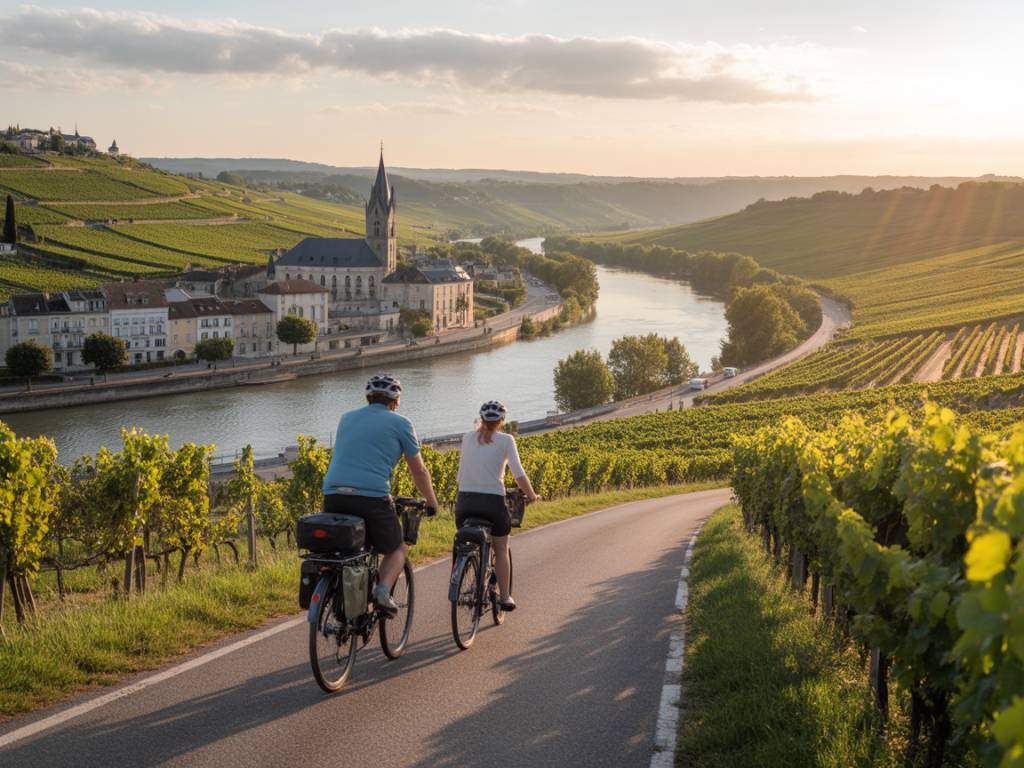
Whenever I plan a cycling trip, France inevitably sneaks to the top of my list. It’s not just the Tour de France mythology or the ridiculously good bakeries in even the tiniest village. It’s the combination of landscapes that seem designed for two wheels: rivers that wind lazily through farmland, quiet backroads through wine country, gentle canal paths, and mountain passes if you’re craving a challenge.
France also “gets” cycling. You’ll find well-marked routes, bike-friendly accommodation, luggage transfer services, and a café culture that practically begs you to stop for a break. What I love most though is how a bike lets you slip behind the postcard – riding through vineyards at harvest time, chatting with the baker who just pulled croissants from the oven, or pausing under the plane trees that line an old canal.
Let me take you through some of the most scenic cycling routes in France – from vineyard-lined lanes to river valleys and storybook villages – and share a few practical tips so you can start dreaming (and planning) your own trip.
Loire Valley: Castles, Vineyards and Riversides
If it’s your first cycling holiday in France, the Loire Valley is the perfect introduction. It’s wonderfully gentle, visually spectacular, and very well-organized for cyclists. Picture yourself pedaling along flat riverside paths, stopping to explore fairy-tale châteaux, then clinking glasses of crisp local white wine at sunset. That’s a typical day here.
The backbone of the region for cyclists is the celebrated Loire à Vélo, a dedicated cycle route running for about 900 km along the Loire River and its tributaries. You don’t have to ride all of it – in fact, picking a stretch of 5–7 days is ideal if you want to mix riding with proper exploring.
Highlights I never tire of include:
- Amboise: Leonardo da Vinci’s final home, a stunning royal château, and a riverfront perfect for an evening stroll after your ride.
- Chenonceau: A château that literally spans the river Cher. The approach by bike through the forest feels like entering a film set.
- Saumur: A charming town perched above the Loire, surrounded by vineyards and known for its sparkling wine.
- Montsoreau & Candes-Saint-Martin: Two of France’s official “most beautiful villages”, where white stone houses tumble down to the water.
Terrain here is mostly flat or gently rolling – ideal for beginners or families. Distances are flexible; you’ll find plenty of villages every 10–15 km where you can stop for coffee, pastries, or a picnic shop.
Insider tip: If you’re traveling in summer, book accommodation ahead around popular spots like Amboise and Saumur. In shoulder seasons (May–June or September), you can be more spontaneous and let the day’s ride decide where you stop.
Burgundy: Quiet Lanes Between Vine Rows
Burgundy feels like it was painted in slow-motion: rows of vines stretching to the horizon, stone villages with flower-decked windows, church bells echoing over the fields. On a bike, you’re right in the middle of this landscape, not just observing it from a car window.
The classic route follows the famous wine villages between Dijon and Beaune along the Route des Grands Crus. It sounds grand – and the wines certainly are – but the riding itself is pleasantly relaxed. You’ll weave between world-renowned appellations with names that feel almost mythical: Gevrey-Chambertin, Nuits-Saint-Georges, Pommard, Meursault.
What I love about cycling here is how compact everything is. You can easily plan days of 30–50 km, with plenty of time for:
- Tastings at small family-run wineries where the winemaker pours you a glass after rinsing their hands from the barrels.
- Long lunches in shaded courtyards, often with a fixed lunch menu that’s a bargain compared to dinner prices.
- Detours up into the Hautes-Côtes for a bit of a climb and wide open views over the vineyards.
The region has developed dedicated cycle paths like the Voie des Vignes (Vineyard Way), keeping you mostly off main roads. Do expect some short hills; Burgundy isn’t as flat as the Loire, but it rewards every bit of effort with a view – and usually a glass of something excellent at the end of the day.
For a relaxed base, I like staying a couple of nights in Beaune. From there you can do loops through different wine sectors without packing your bags each morning, then finish the day wandering Beaune’s cobbled streets and medieval ramparts.
Alsace: Half-Timbered Villages and Ridge-Top Views
Alsace feels almost like a fairy tale drawn with meticulous detail: half-timbered houses in pastel shades, window boxes overflowing with geraniums, church steeples poking above the rooftops. Cycling through this region, especially along the Route des Vins d’Alsace (Alsace Wine Route), feels like stringing together a necklace of perfect villages.
The riding here is a little more varied. You can stick to the valley and gently rolling vineyards, or challenge yourself with climbs into the nearby Vosges mountains for sweeping ridge-top views. Either way, you’re never far from a village café or cellar door.
Villages you should absolutely aim to ride through include:
- Riquewihr: Cobblestone lanes, medieval towers, and some of the region’s finest Rieslings.
- Eguisheim: A circular village where lanes spiral around the church – pure storybook charm.
- Kaysersberg: A riverside town wrapped in vineyards, perfect for an overnight stay.
- Colmar: The larger hub, with canals, museums, and enough restaurants to keep food lovers very happy.
The Alsace wine route is well signposted, and some stretches have dedicated bike paths. Spring and autumn are especially lovely here – in May/June everything is lush and green, and in late September/October the vineyards turn gold.
Don’t miss the chance to refuel Alsace-style: think tarte flambée (a thin, crispy flatbread topped with cream, onions and bacon), local Munster cheese, and of course glasses of Riesling, Gewurztraminer or Pinot Gris in shady courtyards.
Canal du Midi and Southern Sun
If your dream of a cycling holiday involves dappled shade, slow-paced pedaling, and picnics on the bank, the Canal du Midi is calling. Stretching from Toulouse to the Mediterranean near Sète, this 17th-century engineering marvel has become one of France’s classic long-distance cycling routes.
The towpath along the canal is mostly flat and traffic-free. You ride under long tunnels of plane trees, pass sleepy lock-keeper’s houses, and watch brightly painted barges drift by at walking pace. There’s a gentle, almost meditative rhythm to life here.
Some of my favorite stretches include:
- Toulouse to Castelnaudary: Starting in the “pink city” of Toulouse, you soon slip into the countryside, with easy stages and plenty of villages to break the day.
- Carcassonne area: Basing yourself near Carcassonne lets you combine canal riding with a visit to the extraordinary medieval citadel.
- Béziers to the Mediterranean: This section brings you through vineyards towards the sea, finishing near beaches where you can swap cycling shoes for bare feet in the sand.
Note that while much of the route is very comfortable, some unpaved sections can be muddy after rain or a bit rooty where tree roots have pushed through. A hybrid or gravel bike with slightly wider tires is ideal here.
One big plus of the Canal du Midi is the ease of one-way travel. It’s simple to organize bike rental with drop-off at the end, or luggage transfer if you prefer staying in different places each night without hauling everything on your luggage rack.
Practical Tips for Planning Your Cycling Holiday in France
A bit of planning goes a long way in transforming a nice idea into a seamless, joy-filled trip. Here are some practical pointers based on what I’ve learned – sometimes the hard way – over the years:
- Choose your season carefully:
- April–June and September–early October are ideal in most regions: mild temperatures, fewer crowds, and beautiful light.
- July–August can be hot, especially in the south; start your rides early and plan long lunches in the shade.
- Vineyard regions are magical at harvest time (late September), but book well ahead.
- Decide on your cycling style:
- Base yourself in one place for 3–4 nights and do day loops if you like to unpack once.
- Go point-to-point if you love the feeling of a small “journey” each day, arriving somewhere new every afternoon.
- Bike choice:
- Hybrid / trekking bikes are perfect for river valleys, vineyards, and canal routes.
- Road bikes suit smoother, hillier routes (Burgundy climbs, Alsace ridges, etc.).
- E-bikes are increasingly available for rental and open up longer distances or hillier areas to almost everyone.
- Daily distance:
- 30–50 km per day is relaxed and leaves time for visits and lingering lunches.
- 60–80 km per day suits fitter riders or those used to spending most of the day in the saddle.
- Navigation:
- Download offline maps (for example on your phone with a cycling app) and bring a power bank.
- Look out for marked routes like “Véloroutes” and “Voies Vertes” – these are usually well signed.
- Accommodation:
- Search for “Accueil Vélo” or bike-friendly labels; these places are used to storing bikes and early breakfasts.
- Chambres d’hôtes (B&Bs) often offer family-style dinners – perfect after a long ride.
- Food on the road:
- Many restaurants close between lunch and dinner; stock up at bakeries and markets for afternoon snacks.
- Always have water and something small to eat in your bag; a baguette and some cheese turn any riverside bench into a restaurant.
How to Choose the Right Region For You
Every cycling region in France has its own personality, and part of the fun is matching that character to what you’re looking for in a holiday.
- For first-timers and families: The Loire Valley and the Canal du Midi are top choices: mostly flat, well-marked, with lots of services geared towards cyclists.
- For food and wine lovers: Burgundy and Alsace offer dense clusters of wine villages, superb local cuisine, and short distances between charming stops.
- For scenery and variety: Combine river valleys with a few days in the hills: for example, the Alsace plain plus a dip into the Vosges, or Burgundy’s vineyards plus the Morvan regional park nearby.
- For a romantic escape: Think château-dotted Loire, an intimate inn in a vineyard village, and slow evening spins along the river before dinner.
Whichever region you choose, what stays with you from a cycling holiday in France isn’t just the big sights – the famous castles, the celebrated wine names, the Instagram-perfect villages. It’s the quiet, unscripted moments: the farmer who waves as you pass, the scent of warm pine in the afternoon, the blissful silence when you stop pedaling and just float alongside a river, knowing tomorrow will bring another road, another village, another bakery to discover.
In the end, that’s the magic of seeing France by bike. You travel slowly enough for the country to reveal itself, curve by curve, vineyard by vineyard, valley by valley. And once you’ve experienced it, it’s very hard not to start plotting your next route as soon as you get home.