


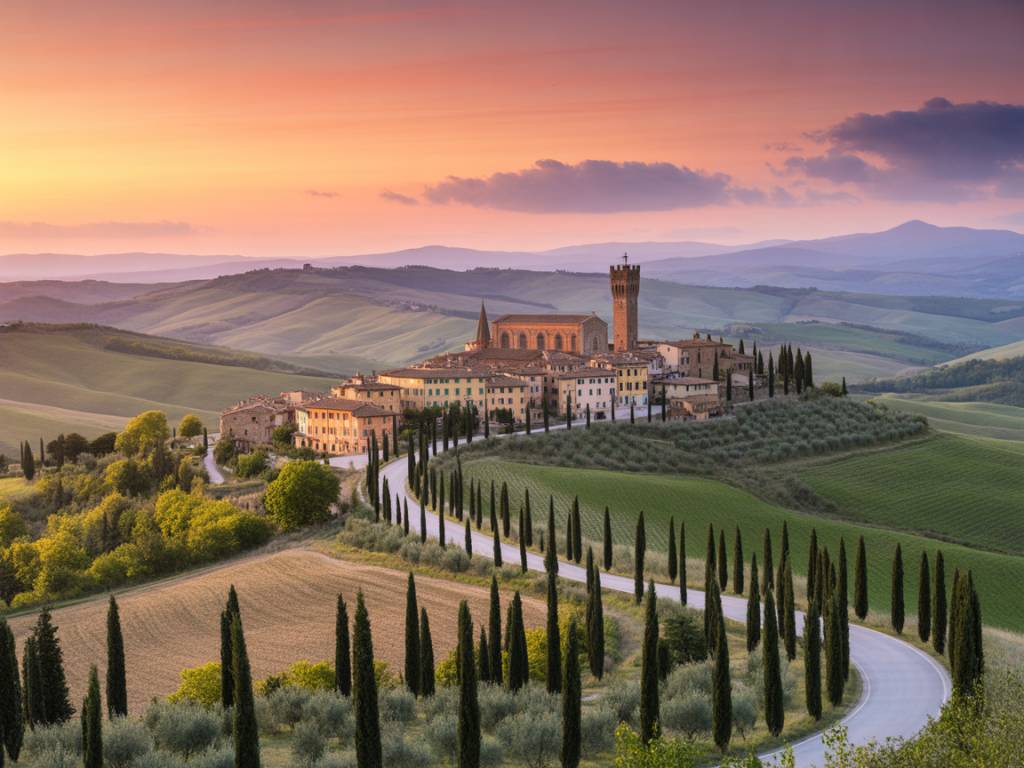
Why a Road Trip in Tuscany Feels Like Driving Through a Painting
There are places you visit, and places you feel. Tuscany is firmly in the second category. The first time I steered a small rental car out of Florence and onto the winding country roads, it felt as if someone had opened the pages of a Renaissance painting and invited me in. Golden hills, vertical lines of cypress trees, stone farmhouses bathing in late-afternoon light, and medieval villages perched on hilltops like crown jewels — everything looked art-directed, and yet totally natural.
A road trip in Tuscany is the most rewarding way to explore this region of central Italy. Trains connect the big cities, of course, but it’s once you leave the tracks and follow the sinuous country roads that Tuscany really reveals itself: the wine estates tucked behind dusty lanes, the tiny hamlets where time seems to have stalled, the panoramic viewpoints you’d never find without your own wheels.
This guide is a personal itinerary stitched together from several trips, designed for travelers who want medieval villages, golden hills, and the deep, soulful flavors of Chianti — all at their own pace.
How Many Days You Need for a Tuscan Road Trip
If you can, give Tuscany at least 5 to 7 days. That’s enough to:
- Spend a couple of nights in a medieval town like Siena or San Gimignano
- Breathe in the rural magic from an agriturismo (farm stay)
- Dedicate a full day to the Chianti wine region
- Explore the postcard-perfect Val d’Orcia (Pienza, Montalcino, Montepulciano)
With 10 days, you can slow down properly: linger over long lunches, add in smaller, quieter villages, and let the road dictate the pace of the trip.
Best Time of Year to Hit the Tuscan Roads
Tuscany is beautiful year-round, but some seasons are made for road trips.
Spring (April–June)
- Rolling hills are intensely green
- Wildflowers line the roads and olive groves
- Temperatures are pleasant, and crowds are lighter than in summer
Autumn (September–October)
- Vineyards glow in warm shades of gold and red
- Harvest season in wine country: Chianti is buzzing with activity
- Truffle and mushroom dishes dominate menus
July and August can be beautiful but also hot and busy, especially in the main towns. Winter is atmospheric in the cities and larger villages, but some rural stays and smaller restaurants may close or operate with reduced hours.
Planning Your Route: The Heart of Tuscany by Car
You can start your road trip from Florence, Pisa, or even Rome, but Florence is often the easiest gateway. Pick up your rental car outside the historic center (to avoid restricted traffic zones, the famous ZTL), and head south. A classic, satisfying itinerary focuses on three main areas:
- The Chianti region between Florence and Siena
- Siena and its medieval neighbors (San Gimignano, Monteriggioni)
- The Val d’Orcia (Pienza, Montalcino, Montepulciano)
You can tackle these in almost any order, but there is a certain magic in watching the landscapes become softer and more cinematic as you drive from the vineyards of Chianti to the wide open, golden folds of the Val d’Orcia.
Chianti: Cypresses, Vineyards, and the Deep Red of Sangiovese
Between Florence and Siena, the Chianti region feels like it was designed to be explored by car. The roads curve and loop around slopes draped with vineyards, silvery olive groves, and dark lines of cypress trees guarding stone farmhouses.
Key villages to explore
- Greve in Chianti – A perfect introduction to the region, with its triangular piazza, wine shops, and delis overflowing with local cured meats and Pecorino cheeses.
- Panzano – A small hilltop town with spectacular views and one of the most famous butchers in Italy. This is where you sit down for a steak and realize you’ve been underestimating what meat can taste like.
- Castellina in Chianti – Narrow streets, a medieval fortress, and underground vaulted walkways. It’s the kind of place where you sip a glass of Chianti Classico and watch twilight soften the stone walls.
- Radda in Chianti – Perched on a ridge, surrounded by vineyards, with quiet charm and plenty of tasting rooms and wineries nearby.
Driving tips in Chianti
- Follow the SR222, known as the Chiantigiana, often described as one of Italy’s most beautiful roads.
- Plan a mix of winery visits: some larger estates with guided tours, and smaller family-run vineyards where the owner might be the one pouring your glass.
- Always book winery tastings in advance, especially from May to October.
Food in Chianti is rustic and generous. Think thick slices of toasted bread rubbed with garlic and drenched in peppery olive oil, wild boar ragù over fresh pappardelle, and grilled meats over open flames. Pair it with a Chianti Classico with its black rooster emblem on the bottle, and you’ll understand why people fall hard for this region.
Siena: A Medieval Masterpiece in Terracotta and Stone
Siena feels like a medieval city that never fully stepped into the modern world — and that’s precisely its charm. Arriving by car, you’ll leave it in one of the parking areas surrounding the historic center, and walk up into a world of narrow, sloping lanes and noble palaces.
What not to miss in Siena
- Piazza del Campo – A shell-shaped square where locals and visitors sit on the warm bricks, lick gelato, and watch the shadows move across the facades. Twice a year, it becomes the dramatic stage for the Palio horse race.
- Siena Cathedral (Duomo) – A striped marble marvel with an interior so rich and intricate you’ll find yourself turning in circles just to catch all the details.
- Climb the Torre del Mangia – For an unforgettable view over Siena’s terracotta rooftops and the undulating countryside beyond.
Siena makes an excellent base for a couple of nights. In the evenings, after the day-trippers have left, the city becomes softer and more intimate. Find a trattoria in one of the quieter side streets, order a plate of pici (hand-rolled thick spaghetti) with a simple tomato or garlic sauce, and a glass of local red from nearby hills.
San Gimignano, Monteriggioni and the Hilltop Village Charm
One of the greatest pleasures of driving in Tuscany is hopping from one hilltop village to another, each with its own personality.
- San Gimignano – Famous for its medieval towers, this small town looks like a stone Manhattan from afar. Inside the walls, you’ll find frescoed churches, artisan shops, and a gelateria often hailed as one of the best in the world. Yes, it’s popular and can be crowded, but arriving early in the morning or late in the afternoon reveals a quieter side.
- Monteriggioni – Tiny, perfectly round, completely encircled by walls. Walking its ramparts, you can see the countryside stretching away in folds and ridges. It feels more like a fortified village from a storybook than a real place.
Between these villages, the drive itself is the experience. Stops become spontaneous: a field of sunflowers in bloom, a lonely cypress-lined driveway begging to be photographed, a roadside stand selling local honey and olive oil.
Val d’Orcia: Golden Hills and Silent Roads
Further south, the Val d’Orcia is where Tuscany becomes almost mythical. Here, the hills roll in smooth waves, dotted with lone farmhouses and the occasional cluster of cypress trees that you’ve probably seen on postcards and screensavers.
Unmissable villages and towns
- Pienza – A renaissance “ideal city” that somehow balances elegance and warmth. Its stone streets open onto terraces with staggering views of the valley. This is the kingdom of Pecorino cheese; you’ll smell it before you even see the shops.
- Montalcino – Home to the glorious Brunello di Montalcino wine. The village itself is small but mercifully unhurried, with tasting rooms, wine bars, and views over oceans of vineyards.
- Montepulciano – A labyrinth of sloping lanes and noble palaces leading up to a grand piazza. Vino Nobile di Montepulciano is the star here, and many historic wine cellars are hidden right under the streets.
Driving in the Val d’Orcia is almost meditative. There are long stretches where you’ll share the road with nobody but the occasional tractor. The light changes constantly — golden at sunrise, soft and hazy in late afternoon, then fiery as the sun dips behind the hills. If you can, plan at least one dawn or sunset drive, stopping whenever the landscape steals your breath (which will be often).
Staying in an Agriturismo: Sleeping in the Tuscan Countryside
To truly feel Tuscany, spend at least a couple of nights in an agriturismo — a working farm or rural property that offers guest rooms or apartments.
What to expect from an agriturismo stay
- Rustic charm: stone walls, wooden beams, terracotta floors
- Views over vineyards, olive groves, or open countryside
- Homemade breakfasts with cakes, jams, local meats, and cheeses
- Sometimes on-site dinners using ingredients grown a few meters from your table
Choosing an agriturismo in Chianti or the Val d’Orcia lets you enjoy the silence of the countryside at night and the joy of waking up directly in the landscape you’ve come to see. It’s also wonderfully practical: you can explore during the day, then return “home” for a glass of wine by the pool or under a pergola.
Practical Tips for Driving Through Tuscany
A Tuscan road trip is not complicated, but a few details will make everything smoother.
- Car size – Opt for a smaller car: easier to park and more comfortable on narrow village streets and country lanes.
- ZTL zones – Many historic centers (Florence, Siena, San Gimignano, etc.) have restricted traffic areas. Park outside the walls or in designated lots and walk in.
- Navigation – Use a combination of GPS and old-fashioned observation. Sometimes the prettiest roads are the ones your GPS doesn’t suggest.
- Fuel – In rural areas, petrol stations can be sparse and may close at lunchtime or evenings. Fill up before the tank gets anxious.
- Driving style – Tuscans drive with confidence but not the chaos you might fear from Italian stereotypes. Keep right, use turn signals, and avoid rushing — you’re here to savor, not to race.
Letting Tuscany Set the Pace
The biggest mistake on a Tuscan road trip is trying to see everything. The secret is to choose a few bases, slow down, and allow space for spontaneity: the unexpected vineyard lunch, the village you’d never heard of, the detour simply because a little road looked inviting.
Some of your most vivid memories won’t come from the big-ticket sights, but from small, unplanned moments: an old man tending his vines at sunset, the chilled white wine handed to you under a fig tree, the way the air smells after a brief summer storm over the hills. This is the real luxury of Tuscany — time, space, and the freedom to follow the road wherever it bends.