



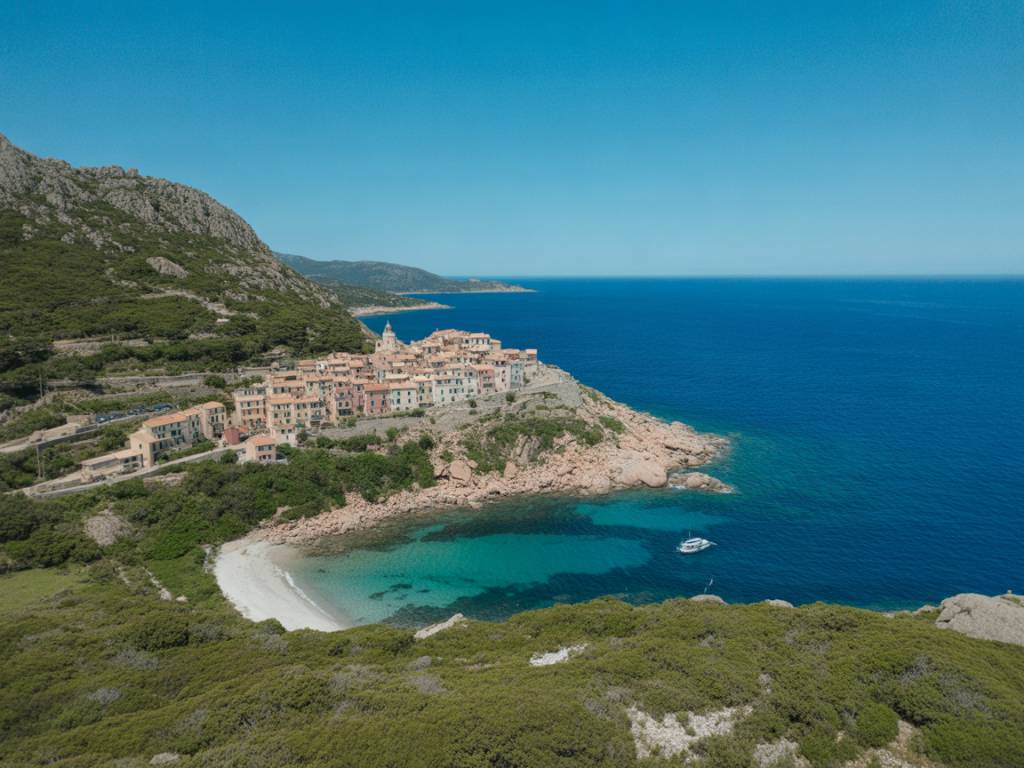
Corsica is one of those places that gets under your skin. It’s rugged and fragrant, with cliffs that plunge into impossibly clear water, chestnut forests wrapped in mist and villages that seem to cling to the mountain rock by pure stubbornness. It feels wild and remote, yet you can cross the island by car in just a few hours. That’s exactly why a self-drive road trip is the best way to explore it — especially if you’re travelling on a moderate budget and want to mix mountain villages, secret coves and spectacular coastal roads.
Why a self-drive road trip in Corsica just works
Corsica is not an island you understand from a single resort. The magic lies in the contrast: waking up in a stone village in the Balagne hills, then swimming in a remote cove on the west coast before driving a corniche road at sunset. Public transport is limited and slow; a car gives you the freedom to chase views, avoid crowds and stay in small family-run places away from the busiest strips.
If you plan carefully, you don’t need a luxury budget. Shoulder season (May–June and September–early October) is perfect: sea warm enough for swimming, roads less packed, prices gentler. You’ll still pay more than on the mainland, but with a bit of planning — and a flexible sense of adventure — Corsica can absolutely be done on a moderate budget.
Planning your route: north, west and mountains
I like to think of a Corsican road trip as a loop, with three main flavours:
- The north: the citadel towns of Bastia and Calvi, the Balagne hill villages, and the wild, wind-battered Cape Corse.
- The west: the legendary coastal road between Calvi and Porto, the red rocks of the Calanques de Piana, and tiny coves hidden under cliffs.
- The interior: chestnut forests, stone villages like Corte and Zonza, twisting mountain passes and river gorges where locals escape in summer.
With 7–10 days you can get a good taste of all three, without spending your whole trip behind the wheel. Shorter itinerary? Focus on the north and west, and save the deep south and eastern plains for another time.
Car rental, driving and budget tips
First, the car. Book early, especially for July and August. Pick a small, fuel-efficient vehicle — not just to save on fuel, but because village streets and mountain hairpins can be very narrow. Manual transmission is the norm, and automatics are often significantly more expensive.
Approximate daily costs for a couple travelling on a moderate budget might look like this, outside peak season:
- Car rental: €35–€60 per day, depending on car size and season.
- Fuel: €1.80–€2.10 per litre is common; the island is hilly, so factor in higher consumption.
- Accommodation: €70–€120 per night for simple hotels, guesthouses or apartments.
- Food: €10–€15 for a picnic or casual lunch, €18–€30 for a dinner with wine in a mid-range restaurant.
Driving in Corsica is an adventure in itself. Roads are generally well-maintained but often narrow, with sharp curves and steep drops, especially in the mountains and along the western coast. Local drivers know the roads intimately and may be fast; let them pass at the first safe opportunity and enjoy the journey at your own pace.
Three practical rules:
- Never plan long drives at night — you’ll miss the views and the roads can be tiring.
- Fill the tank whenever you’re below half if you’re heading inland; fuel stations can be sparse in mountain areas.
- Allow extra time for every leg; Google Maps often underestimates driving times on winding roads.
Mountain villages that feel like another century
Corsica’s mountains are not just scenery; they’re the island’s soul. Even a short detour inland reveals another rhythm, where evenings smell of woodsmoke and wild herbs, and village bars fill with locals discussing the weather and football with equal intensity.
Corte: the historic heart
Once the capital of independent Corsica, Corte sits in a bowl of mountains, crowned by a citadel. Park on the outskirts and wander up through narrow streets towards the belvedere for views over the Restonica and Tavignano valleys. The old town is compact and walkable, with a few cafés and small restaurants where you can try local charcuterie, brocciu cheese and fiadone (a light Corsican cheesecake).
On a moderate budget, look for simple family-run hotels or small apartments in the newer part of town, a short walk from the historic centre. From Corte, it’s an easy drive into the Restonica valley, where the road twists between rock walls, pine trees and cascades. In summer, locals perch on warm boulders and plunge into jade pools; bring water shoes and a towel in the car, just in case you find your perfect spot.
Balagne hill villages
Above the seaside towns of Calvi and L’Île-Rousse, the Balagne region hides a string of impossibly picturesque villages: Sant’Antonino, Pigna, Lumio, Aregno, Speloncato. Expect stone houses, vaulted alleys, tiny chapels and balconies laden with geraniums.
A self-drive makes it easy to stitch these together into a lazy loop. Park at the entry of each village (many are pedestrian in the centre) and just roam. Pigna is known for its artisans — luthiers, potters, sculptors — while Sant’Antonino, perched on a rocky outcrop, offers 360-degree views that make the slow drive up absolutely worth it.
Staying in one of these villages, rather than on the coast, can be surprisingly budget-friendly. Guesthouses are often cheaper than seafront hotels, breakfasts are generous, and the evening light over the hills is its own luxury.
Secret coves and wild swimming spots
Corsica’s beaches are famous, but many of the best coves are not signposted and require a bit of curiosity. With your own car, you can time your swims to avoid peak crowds and hop from cove to cove along the coast.
The west coast: between Calvi and Porto
This stretch is one of the most beautiful coastal drives in Europe — a rollercoaster of cliffs, maquis-scented slopes and flashes of turquoise water. It’s not fast going, but that’s the point. Keep an eye out for small lay-bys where locals have left a few cars; often a rough path will drop down to a rocky cove or pebble beach.
A simple strategy works well:
- Shop for picnic supplies in Calvi or Porto (bread, cheese, tomatoes, fruit, a bottle of rosé if someone else is driving later).
- Set off mid-morning and stop wherever the sea looks irresistible.
- Swim, snack, read, then move on when the sun shifts or the wind picks up.
Some coves are completely wild — no facilities, no shade. A folding parasol, reef-safe sunscreen and plenty of water in the boot of the car will transform these from “quick stop” to “perfect half-day escape”.
River pools in the interior
If the sea is choppy or the mistral is blowing, head inland to rivers like the Fango, Tavignano or Restonica. You’ll find natural basins of crystal-clear water under stone bridges, or hidden a short walk from the road. These are beloved by locals; respect that by keeping noise down, taking rubbish away and avoiding crowded spots at the hottest part of the day.
Coastal roads worth the detour
Part of the joy of a Corsican road trip is that the driving is not just a way to get somewhere — it’s part of the experience. A few stretches are unmissable if you enjoy scenic roads (and don’t suffer from vertigo).
Calanques de Piana and the road to Porto
Between Porto and Piana, the D81 carves through red granite cliffs sculpted into arches, needles and overhangs. At sunset, the rocks glow orange and the sea turns deep blue — it’s pure drama. Traffic can be slow in high season and parking very limited; arrive early in the morning or later in the afternoon, and be prepared to walk a bit from your car to the best viewpoints.
This is not the place to rush. Drive with your windows down, stop at lay-bys (only where it’s clearly safe), and walk a few minutes along the road to see the formations from different angles. Even a short wander along one of the marked trails gives you a sense of how wild the coastline really is, beyond the ribbon of asphalt.
Cape Corse: the island’s finger
If you’re starting or ending in Bastia, a loop around Cape Corse is a superb day or two. The eastern side is gentler, with small beaches and hamlets; the western side is rugged, with terraced hillsides, watchtowers and villages like Nonza perched above black pebble beaches.
For budget-conscious travellers, Cape Corse can be a smart place to stay a night or two: small guesthouses, fewer big resorts, and lots of self-catering options. Stock up on groceries in Bastia or Saint-Florent, then surrender to the rhythm of sea, cliffs and wind.
Sleeping well on a moderate budget
Accommodation in Corsica ranges from simple gîtes and campsites to boutique hotels and chic villas. On a moderate budget, a mix of small hotels, guesthouses and apartments tends to work best. Key tips:
- Book coastal nights in advance for June–September; mountain villages can often be left more flexible.
- Consider staying one or two blocks back from the waterfront — often significantly cheaper, with better parking.
- Look for places with kitchenettes if you enjoy cooking; a few meals at home with market produce can save a lot.
- If you’re comfortable with it, rural gîtes or agriturismi-style stays offer good value and great local food.
Personally, I love splitting nights between the sea and the hills: a couple of nights near Calvi or L’Île-Rousse, one or two in a Balagne village, perhaps one in Corte, and another near Porto or Piana for the west coast drama.
Eating, drinking and keeping costs in check
Corsican food is hearty and often meat-heavy, with wild boar stews, cured hams, cheeses, and chestnut-based dishes. Seafood sings on the coast, from grilled fish to simple mussels and local oysters in some areas.
To keep your budget under control without sacrificing pleasure:
- Make lunch your main restaurant meal; many places offer more affordable menus at midday.
- Pick up breakfast items from bakeries and supermarkets instead of always eating in cafés.
- Embrace picnics: fresh bread, local cheese, tomatoes, olives and seasonal fruit are affordable and delicious.
- Ask for carafes of tap water (“une carafe d’eau”) rather than bottled in restaurants.
Local wines, particularly from the Patrimonio and Ajaccio regions, are excellent value if you buy them in supermarkets or directly from vineyards, then enjoy them on your terrace or balcony at sunset.
A few final tips for a smooth Corsican road trip
To make the most of your self-drive adventure, a little preparation goes a long way:
- Pack light: village streets and stepped alleys are not suitcase-friendly; a soft bag is easier.
- Bring good walking shoes for cobbled lanes and short hikes to viewpoints or coves.
- Download offline maps; phone signal can be patchy in some mountain areas.
- Respect parking rules; fines and towing are not uncommon in busy coastal towns.
- Learn a handful of French phrases (and a couple of Corsican greetings if you can) — it opens doors.
Most importantly, leave space in your schedule for detours. The beauty of a Corsican road trip is in the unplanned: the roadside stall selling clementines, the path you notice dropping towards a hidden inlet, the tiny bar in a mountain village where you sit for “just one coffee” and end up talking to the owner about the winter storms.
With a modest budget, a willing driver and an appetite for winding roads, Corsica rewards you again and again — in salt on your skin, the smell of wild herbs in the evening air, and the sight of mountains fading into the sea as you round another headland.