



Why Namibia Is Perfect For a Self-Drive Adventure
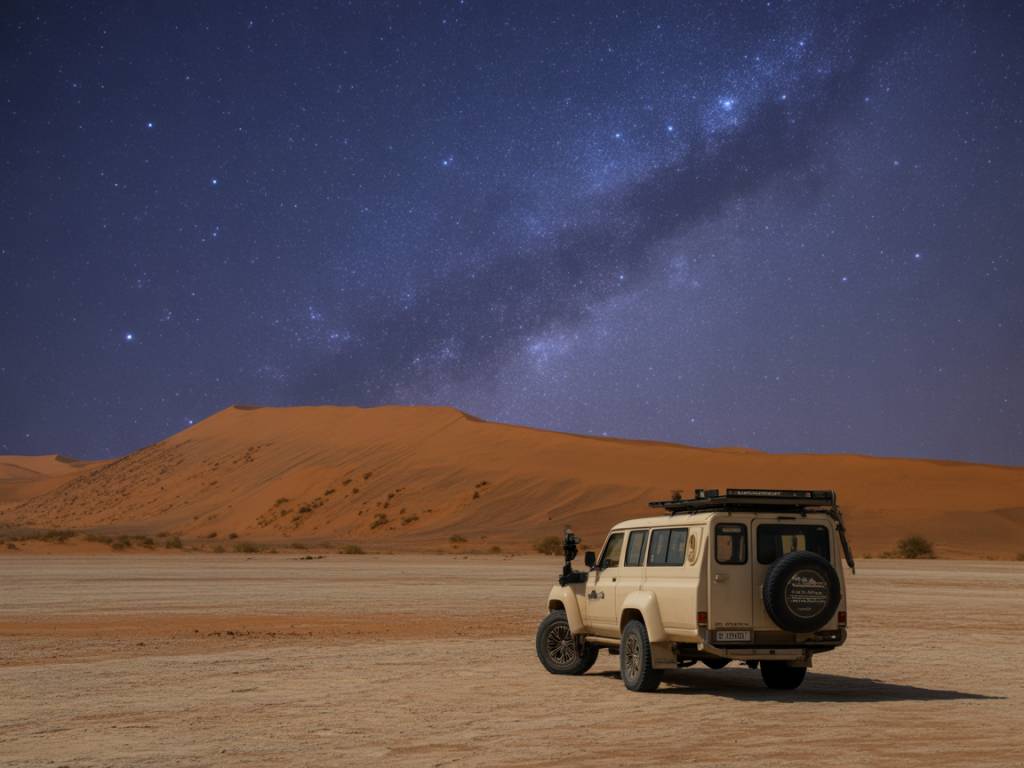
Namibia is the kind of place that gets under your skin. It’s the silence of the desert, the crunch of gravel under your tyres, the way the Milky Way drapes itself shamelessly across the night sky. It’s also one of the easiest and safest countries in Africa for an independent road trip – and you don’t need a luxury budget to experience it properly.
On my own self-drive journey, I found wide, empty roads, small lodges and campsites with million-dollar views, and wildlife encounters that felt straight out of a nature documentary. The real luxury here isn’t a five-star resort – it’s space, solitude and raw, untouched landscapes.
If you’ve been dreaming of a road trip that mixes desert dunes, wildlife and stargazing, but you’re working with a moderate budget, Namibia might be exactly what you’ve been searching for.
When to Go: Seasons, Weather and Light
Namibia is mostly dry and sunny year-round, but your experience – and costs – will change slightly with the seasons.
Best all-round months: May to October
- Cooler temperatures, especially at night
- Dry season – better wildlife viewing as animals gather at waterholes
- Clear skies for astrophotography and stargazing
- Less risk of flash floods on gravel roads
Hotter but quieter months: November to April
- Summer, with higher daytime temperatures (especially in the north and desert)
- Short thunderstorms possible, mainly in the central and northern areas
- Greener landscapes, more dramatic skies for photography
- Lower prices and fewer visitors in many places
If you’re travelling on a moderate budget, aim for the shoulder seasons: May–June or September–November. You’ll often find better availability and slightly lower rates, while still enjoying good wildlife viewing and comfortable temperatures.
Planning a 10–14 Day Self-Drive Itinerary
Namibia may look small on a map, but distances are long and the pace of a road trip should be unhurried. For a first-timer, a 10–14 day loop from Windhoek is ideal, blending deserts, coast and wildlife without rushing.
Suggested route from Windhoek:
- Windhoek – 1 night
- Sesriem / Sossusvlei (Namib Desert) – 2 to 3 nights
- Swakopmund (via Solitaire and the Gaub/Kuiseb passes) – 2 nights
- Skeleton Coast & Damaraland (Uis / Twyfelfontein area) – 2 nights
- Etosha National Park – 3 nights (split between two camps if possible)
- Back to Windhoek – 1 night before departure
With a couple more days, you could add:
- Waterberg Plateau – great hiking and scenery
- The more remote north-west (Kaokoland) if you’re confident on rougher roads
Do You Really Need a 4×4?
The short answer: not always, but often yes – especially if you want to stay flexible, feel secure on gravel and access more remote spots.
Namibia’s main trunk roads (the B-roads) are tarred and generally excellent. But many of the most beautiful areas – the Namib Desert, Damaraland, some Etosha access roads – involve long stretches of gravel. These are usually well-graded, but conditions can change quickly after rain or heavy use.
Why a 4×4 is worth the extra cost:
- Higher clearance for rough or corrugated sections
- Better stability on gravel and sand
- Often comes with two spare tyres and essential tools
- More comfortable on long driving days
That said, if you’re strictly watching your budget and sticking to a classic itinerary (Windhoek – Sossusvlei – Swakopmund – Etosha – Windhoek), a well-maintained high-clearance 2×4 can be enough outside the height of the rainy season. Always ask the rental company honestly which routes you plan to take and follow their advice.
Driving in Namibia: Safety and Practical Tips
Driving in Namibia feels wonderfully free, but you need to respect the distances and conditions. I’ll never forget the serenity of a 200 km stretch without seeing another vehicle – but that solitude means you must be prepared.
Key driving tips:
- Don’t drive at night. Livestock and wildlife on the roads are a serious hazard. Plan to arrive before dark.
- Fuel up often. If you see a petrol station, top up. Distances between stations can be long, especially in the north-west.
- Watch your speed on gravel. Many accidents happen when drivers go too fast on loose surfaces. 60–80 km/h is usually more than enough.
- Keep distance. Stay well back from vehicles ahead to avoid flying stones and poor visibility in dust clouds.
- Check tyres daily. A quick walk-around in the morning can save you from discovering a slow puncture in the middle of nowhere.
Essential items in the car:
- Two spare tyres and a jack (check this at the rental office)
- Paper map or offline GPS app – phone signal can be patchy
- At least 5 litres of drinking water per person in the car
- Basic first-aid kit and a flashlight or headlamp
Budgeting Your Trip: Where to Spend and Where to Save
Namibia isn’t a classic “backpacker-cheap” destination, but it’s absolutely possible to travel on a moderate budget with smart choices. Think mid-range guesthouses, national park camps, and a mix of self-catering and simple restaurant meals.
Main cost categories:
- Car rental: The biggest expense. A 4×4 with basic insurance can be moderate to pricey, depending on season. Booking early usually helps.
- Fuel: Distances are long, so factor this in. Sharing the vehicle with one or two travel companions reduces the per-person cost significantly.
- Accommodation: Options range from national park campsites and basic bungalows to comfortable lodges. On a moderate budget, target mid-range guesthouses, small lodges, and campground chalets.
- Park and entry fees: Etosha, Sossusvlei and other reserves charge daily conservation fees that are reasonable but add up over days.
- Food: Self-catering is easy in Namibia. Many lodges offer braai (barbecue) areas, and supermarkets in Windhoek and Swakopmund are well stocked.
Money-saving ideas that don’t ruin the experience:
- Mix a few splurge nights (like a special desert lodge) with simpler guesthouses or camps.
- Cook your own dinners in places where you have kitchen facilities or a braai.
- In Etosha, self-drive safari is included: you don’t need to pay for every game drive if you’re comfortable driving yourself.
- Travel in a small group of 2–4 people to split car and fuel costs.
Highlights of the Route: What Not to Miss
Sesriem & Sossusvlei: Dancing with the Dunes
Driving into the Namib Desert feels like entering another planet. Rust-red dunes rise like waves, and the air has this dry, crystalline clarity that makes every colour more intense.
Base yourself near Sesriem, the gateway to the Sossusvlei area. The main attractions here:
- Deadvlei: A white clay pan dotted with ghostly, dead camelthorn trees, framed by towering dunes. Go at sunrise or sunset for the most dramatic light.
- Dune 45: A classic, easily accessible dune to climb. It’s a short but sandy slog; the panoramic sunrise view is worth every breath.
- Sesriem Canyon: A narrow, rocky gorge carved by the Tsauchab River – a good stop in the late afternoon when the sun is lower.
On a moderate budget, look for:
- Simple lodges or guest farms within a 30–60 minute drive of the park gate.
- Campsites with good showers and spectacular sunsets baked into the nightly rate.
Swakopmund & the Atlantic Coast: Desert Meets Ocean
After the heat of the interior, rolling into Swakopmund feels almost surreal. The cold Atlantic fog drifts in over bright, German-influenced architecture, and dune fields loom just beyond the last houses.
This is a perfect place to slow down and enjoy some activities:
- Walk the jetty at sunset and feel the cold Atlantic spray.
- Try sandboarding or a scenic drive into the dunes.
- Take a day trip to Walvis Bay to see flamingos and join a dolphin or seal cruise if budget allows.
Swakopmund is also friendly to mid-range travellers:
- Plenty of guesthouses and self-catering apartments.
- Good supermarkets and bakeries to stock up for the next leg of the road trip.
- Affordable restaurants serving fresh fish and local game.
Damaraland & the Skeleton Coast: Rugged and Remote
Heading north, the landscape becomes a study in emptiness. Rust-coloured mountains, dry riverbeds and vast horizons define Damaraland, one of my personal favourite regions in Namibia.
Highlights here include:
- Twyfelfontein: Home to some of Africa’s finest rock engravings, thousands of years old.
- Organ Pipes & Burnt Mountain: Strange geological formations bathed in golden light at sunset.
- Chances – never guaranteed – of spotting desert-adapted elephants, especially along dry riverbeds.
Accommodation in this area ranges from rustic camps to stylish lodges nestled among boulders. On a moderate budget, aim for:
- Community-run campsites or lodges, which often give you a more intimate, local experience.
- Staying slightly off the most famous hot-spots to reduce costs while keeping the same dramatic scenery.
Etosha National Park: Self-Drive Safari Heaven
Etosha is where the wildlife magic happens. Imagine a shimmering salt pan stretching to the horizon, waterholes encircled by zebra and springbok, and the sudden, silent arrival of a lion at dusk.
The beauty of Etosha for self-drivers is that you’re in control. You can:
- Plan your own routes around the park’s network of roads.
- Spend an entire morning at a single waterhole just watching the drama unfold.
- Return to camp for a midday rest, then head out again in the late afternoon.
For a moderate budget:
- Stay in Namibian Wildlife Resorts (NWR) camps inside the park – they have various accommodation types, from campsites to basic rooms and bungalows.
- Consider splitting your time between two or three camps (like Okaukuejo, Halali and Namutoni) to explore different sections of the park.
- Use the floodlit waterholes at night – you can see rhino, elephants and predators without paying extra for a night drive.
The Night Sky: Namibia’s Free Luxury
One thing no budget can buy anywhere else is Namibia’s night sky. Away from towns, you’re under some of the darkest skies on Earth. I still remember standing in absolute silence outside my tent, neck craned upwards, the Milky Way arcing from horizon to horizon like a river of light.
For stargazing:
- Look for accommodations that promote “dark sky” experiences or are far from major settlements.
- Turn off all unnecessary lights and let your eyes adjust for 15–20 minutes.
- If you have a tripod and a basic camera, experiment with long-exposure shots – Namibia is a paradise for astrophotography.
Final Tips for a Smooth Self-Drive Namibia Trip
A successful road trip here is all about preparation, curiosity and a willingness to slow down. Before you set off, keep in mind:
- Book car and key accommodations several months in advance for high season.
- Carry printed copies of reservations and your rental agreement.
- Tell someone (a lodge host or friend at home) your approximate route and check in from time to time.
- Respect wildlife and distance – never get out of the car in Etosha except in designated areas.
- Take your time. Distances are part of the experience; the long, quiet roads are where Namibia works its magic on you.
Namibia rewards those who embrace its scale and silence. With a reliable vehicle, a moderate budget and a taste for adventure, you’ll find a country that feels tailor-made for independent travellers – a place where your daily decisions are guided by the position of the sun, the curve of a gravel road, and the haunting call of a jackal under a sky full of stars.