


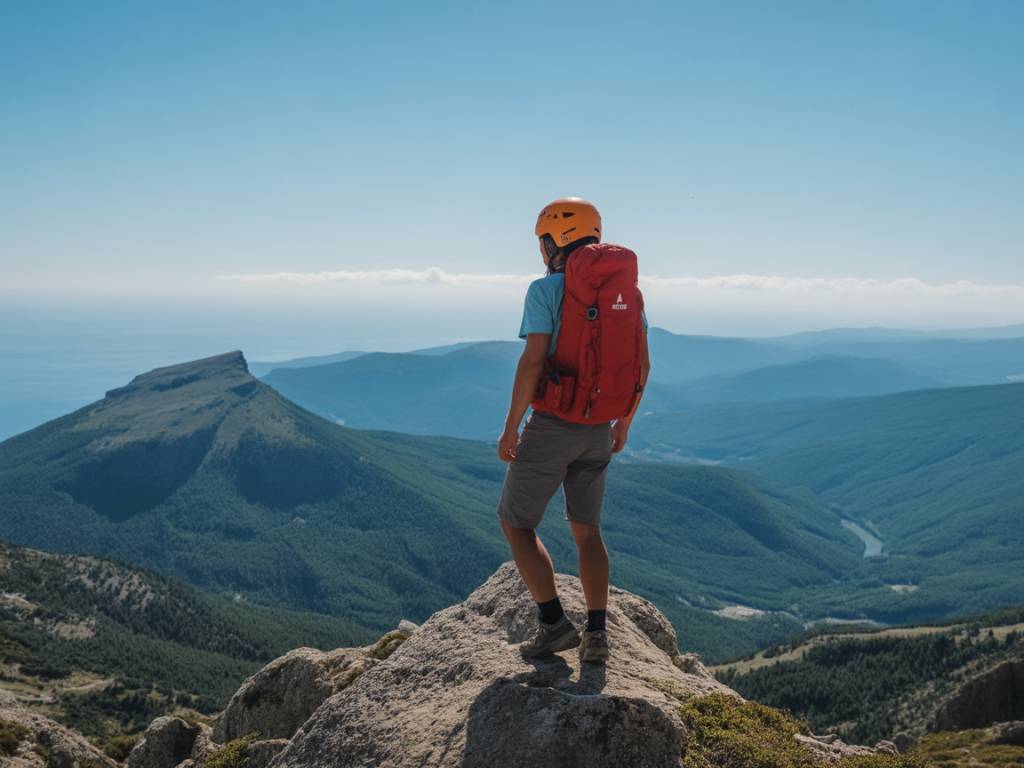
Some trips stay with you as a postcard. Others stay as a physical memory — the burn in your thighs, the cold spray on your face, the split-second before a jump when the world goes very quiet. If you’re drawn to that second kind, then activity holidays in Europe might just be the most underrated way to travel this continent. From the jagged ridgelines of the French Alps to the volcanic craters of the Azores, Europe is an outdoor playground that rarely gets the adventure credit it deserves.
These are my favourite adrenaline-filled escapes — the ones that left me breathless, humbled, and utterly hooked.
Why activity holidays europe deserves a spot on your bucket list
Europe is often framed as a destination for history and culture — and it is. But it also packs an extraordinary range of adventure landscapes into a relatively compact geography. Within two to three hours by plane, you can shift from snow-dusted Alpine passes to wild Atlantic surf, from limestone canyons to smoking volcanic craters.
What makes activity holidays in Europe particularly compelling:
- Accessibility: Excellent infrastructure — marked trails, mountain huts, certified guides — means adventures are within reach for beginners and seasoned athletes alike.
- Variety: Via ferrata, white-water rafting, trail running, mountain biking, canyoning, surfing, hiking — often all within the same region.
- Short travel times: Dramatically different landscapes are rarely more than a short flight or train ride apart.
- Cultural reward: After a big day outside, Europe consistently delivers on food, wine and atmosphere to recover in style.
You don’t need to be a seasoned athlete to enjoy any of this. A reasonable level of fitness, a tolerance for a little fear and a genuine curiosity about the outdoors will take you a very long way.
Via ferrata in the French Alps: hanging off cliffs above Chamonix
The first time I clipped a carabiner onto a steel cable above the Chamonix valley, my hands were shaking. Below me, the valley floor stitched itself together in greens and greys. Ahead, the Aiguille du Midi floated in the summer haze. I took a breath, let go of the ledge, and moved.
Via ferrata — literally « iron path » in Italian — is the perfect bridge between hiking and climbing. Iron rungs, ladders and fixed cables create a vertical route through mountain rock that requires no prior climbing skills, just a head for heights and a willing sense of adventure.
Best routes for different levels
- Chamonix Valley (beginner–intermediate): Several accessible routes with guiding companies providing full gear — helmet, harness, lanyard — and patient instruction. Stunning views of Mont Blanc from the very first pitch.
- La Grave & the Écrins (intermediate–advanced): Wilder, quieter, more committing. The Écrins national park offers technical routes with genuine exposure and fewer crowds.
- Gorges du Verdon (intermediate): Further south in Provence, these limestone gorges offer warmer conditions and a completely different aesthetic — turquoise river far below, swifts cutting the air around you.
Practical tips
- Best time: Late June to September, depending on residual snow on higher routes.
- Fitness: Comfortable on steep multi-hour hikes; okay with sustained exposure to height.
- Gear: Most guiding companies provide a full kit. Bring gloves — the cables get hot in direct sun.
Trail running and glacier hiking in Switzerland
Switzerland’s trail network is one of the finest in the world: over 65,000 kilometres of marked paths, colour-coded by difficulty, threading through landscapes that feel almost offensively beautiful. The Interlaken region, wedged between Lake Thun and Lake Brienz, is a natural hub for anyone who wants to move through mountains rather than just look at them.
Highlights of the Bernese Oberland on foot
- Lauterbrunnen Valley: A glacier-carved trench with 72 waterfalls dropping from vertical walls. Running the valley floor trail at dawn, before the crowds arrive, is genuinely moving.
- Mürren & Gimmelwald: Car-free villages perched on a cliff ledge, connected by trails with uninterrupted views of the Jungfrau, Mönch and Eiger.
- Lake Oeschinen: A turquoise lake ringed by limestone cliffs at 1,578 metres. The loop trail rewards you with a cold, clear swim at the end.
One afternoon above Mürren, I stopped to catch my breath. My calves were burning, my T-shirt soaked, and the only sounds were a distant cowbell and the faint whistle of the cog railway far below. That particular brand of earned exhaustion is, I’ve decided, my favourite kind of luxury.
Practical tips
- Best time: Late May to mid-October for trails below 2,000 metres; July–September for higher alpine routes.
- Getting around: The Swiss Travel Pass covers trains, buses and many cable cars — invaluable for combining multiple trailheads in one trip.
- Overnight tip: Book a mountain hut (SAC huts) for a sunrise start on high routes. Dinner, a bunk and a view that costs nothing extra.
White-water rafting and canyoning in Slovenia’s Soča Valley
The Soča River is one of those places that immediately makes you wonder why it isn’t more famous. Flowing through western Slovenia from the Julian Alps to the Adriatic, it runs in shades of jade and turquoise so vivid they look digitally enhanced — and it offers some of the best white-water in Europe.
The small town of Bovec is the adventure hub. Mornings here smell of coffee and river mist, and it’s perfectly normal to see people in wetsuits ordering breakfast.
Rafting the Soča
The river offers everything from gentle family floats to technical Grade IV rapids. On my first descent, the guide pushed us off into the current and the boat immediately lifted, dipped and spun. Between rapids with names like « Happy Ending » and « Gold Cup », there are long silent stretches where you float past limestone walls and forest, the mountains a steady presence on the horizon.
Canyoning in the side gorges
If rafting reads the river from above, canyoning dives into its hidden chapters. Guides lead you down natural rock slides, abseil you alongside waterfalls and have you jump into pools carved deep into the limestone. That pause before a jump — toes curled over the edge, cold air rising from below — is exactly what makes the leap feel like flight.
Practical tips
- Best time: May to September; water levels are highest and most thrilling in late spring snowmelt.
- Skill level: Trips are graded clearly; communicate your experience honestly with your guide.
- Extend the trip: Combine Bovec with a calmer day at Lake Bled or a wine-tasting afternoon in the Goriška Brda hills — a beautiful contrast to the adrenaline.
Mountain biking the Dolomites: theatre on two wheels
The Dolomites look almost unreal: pale, jagged towers that glow rose-pink at sunset, larch forests, meadows stitched with wildflowers. If the Alps are dramatic, the Dolomites are theatrical — and they translate beautifully into mountain biking terrain.
Based near Corvara, in the Alta Badia area, I rented a full-suspension bike and discovered that chairlifts operate in summer specifically to send you back to the top. That means less climbing and more descending: fast, flowy singletrack through forest, wooden boardwalks over meadow, gravel switchbacks with a view of the Sella massif at every corner.
- Sellaronda bike loop: A legendary 55km circuit around the Sella Group, covering four mountain passes. Most riders complete it in a day — an extraordinary achievement in an extraordinary landscape.
- Trails above Cortina d’Ampezzo: More technical options for experienced riders, with the bonus of Italy’s most famous mountain town at your doorstep.
- E-bike options: If the climbs feel too much, e-mountain bikes are widely available and let you focus entirely on the views and descents.
Volcano hiking and wild swimming in the Azores
The Azores sit in the mid-Atlantic, technically Portuguese but geologically in a category of their own: nine volcanic islands where the earth still feels unfinished. São Miguel, the largest island, is where most activity-focused trips begin — and it rarely disappoints.
Hiking the crater rim of Sete Cidades, a twin lake in a dormant caldera, is one of the finest short hikes in Europe: 12 kilometres of trail above a view that seems too large to process. The lakes below are different colours — one green, one blue — because of the way light hits the water at different angles.
- Sete Cidades rim trail: 12km loop, approximately 4–5 hours, stunning panoramas over both crater lakes and the Atlantic coast.
- Furnas Valley: Active fumaroles, boiling mud pools and a lake with a crater bottom — surreal and slightly unsettling in the best way.
- Wild swimming at Ponta da Ferraria: A natural thermal pool where geothermal water meets the sea — warm on one side, cool on the other.
- Canyoning in Ribeira dos Caldeirões: A lush canyon of waterfalls and natural pools, ideal for a half-day adventure combined with a cultural afternoon.
The Azores have a climate that stays mild year-round, making them a legitimate option for activity holidays even in November or March — a real advantage over purely Alpine destinations.
How to plan your own adrenaline-filled escape across Europe
The beauty of activity holidays in Europe is that they reward a little planning but forgive improvisation. Here’s a simple framework to build your own trip:
- Choose your pace: Multi-destination trips (Alps + Azores, Dolomites + Slovenia) work beautifully over two weeks. Single-destination deep dives suit shorter breaks.
- Book guides early: Especially in peak summer months (July–August), the best guiding companies fill up fast. A reputable guide transforms a good experience into a great one.
- Layer the intensity: Alternate high-adrenaline days with slower ones — a long lunch in a rifugio, a thermal bath, a wine region. The contrast makes everything sharper.
- Pack light, pack right: Merino wool base layers, waterproof shell, trail shoes and a compact daypack will take you through 90% of European activity holidays. Most specialist gear — harnesses, helmets, wetsuits — is provided or easily rented on arrival.
Europe rarely runs out of new terrain to explore. The Alps shift in character from valley to valley; the Atlantic islands feel like a different planet from the Mediterranean coast. Every activity holiday here is different — but that particular feeling, of coming back to the trail or the river or the cliff edge with your whole body alive, never changes.