



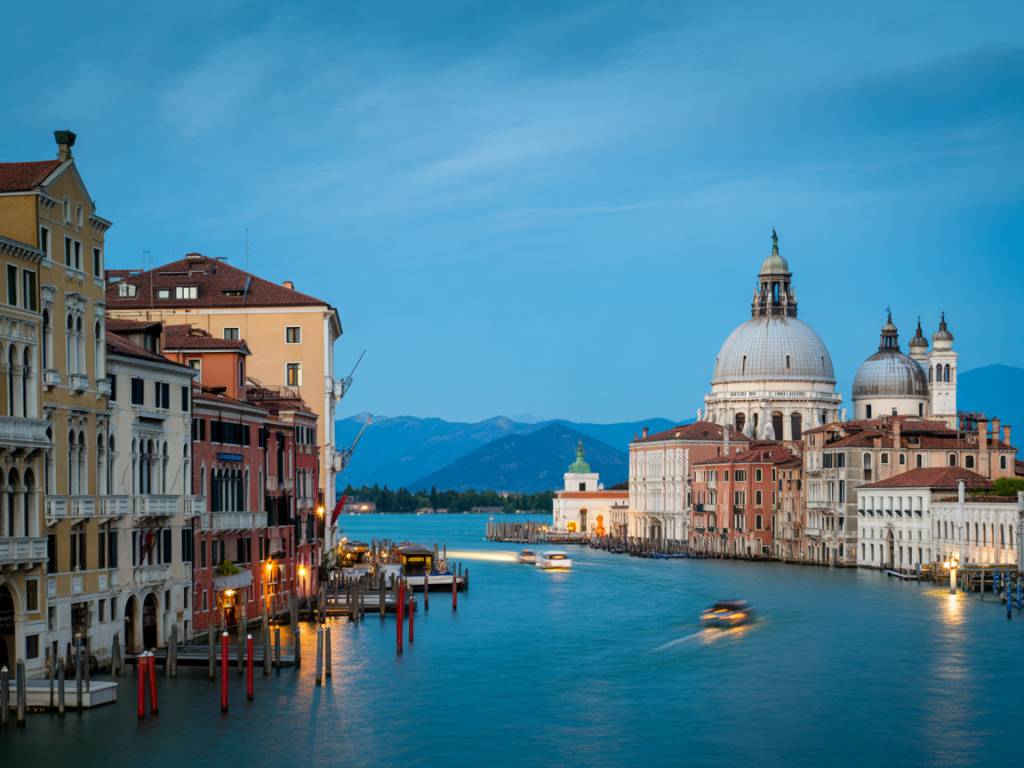
Between the blue hush of Lake Garda and the shimmering mirage of Venice, there is a line you can trace in a single day. Mountains give way to plains, the air thickens with salt, and suddenly the lake’s gentle waves are replaced by the soft slap of water against stone palazzi. This journey — from lake to lagoon — is more than a transfer: it’s an invitation to practice slow travel, Italian style.
If you’re staying around Lake Garda and dreaming of Venice, a day trip is not only possible, it can be deeply enjoyable… as long as you don’t try to “do it all”. Let’s wander together between these two worlds and see how to craft a day that feels rich, not rushed.
Why Venice makes a perfect day trip from Lake Garda
On the map, Lake Garda and Venice seem like two different holidays: one alpine and serene, the other baroque and theatrical. But they’re surprisingly close. From the southern shores of the lake, trains reach Venice in about 1.5 hours. That means you can have breakfast by the lake, aperitivo by a Venetian canal, and be back under the mountain stars by nightfall.
What makes this day trip special isn’t just convenience. It’s the contrast:
- Morning: pastel villages mirrored in still water, the faint sound of clinking coffee cups.
- Midday: Venice unfolding in a jumble of bridges, churches and laundry lines swaying above narrow calli.
- Evening: the quiet return to the lake, as if Venice were a dream you stepped into for a few hours.
For travellers who love variety but dislike changing accommodation every two nights, basing yourself on Lake Garda and “borrowing” Venice for a day is an elegant compromise.
Choosing your base on Lake Garda
Lake Garda is large, and your choice of base will shape how easy your Venetian escape will be. If Venice is on your mind, the southern shore is your best ally.
Desenzano del Garda and Peschiera del Garda both have direct trains to Venezia Santa Lucia (the station right on the Grand Canal). They also offer a lively atmosphere by the water, with plenty of cafés and evening passeggiata vibes.
Good options if Venice is a priority:
- Desenzano del Garda: Chic and slightly urban, with a pretty old harbour and easy train access. Ideal if you like a bit of nightlife after your day trips.
- Peschiera del Garda: A charming fortified town where the Mincio river meets the lake. Well-connected by rail and slightly more relaxed in feel.
- Sirmione: The famous “peninsula town” with its castle and Roman ruins. No station in town, but Desenzano is a short bus or ferry ride away.
If you’re staying further north — in Riva del Garda, Limone, Malcesine or Torbole — a day trip to Venice is still feasible, but it will be longer. You’ll first need to reach a southern station by bus or ferry, adding an hour (or more) each way. Beautiful, yes, but keep an eye on timetables if you don’t want your day to turn into a marathon.
How to get from Lake Garda to Venice
There are several ways to trace that line from the lake to the lagoon. The choice depends on your style: independent and flexible, or guided and carefree.
By train (the most relaxed option)
This is my favourite way — there’s something very poetic about gliding through the flat Venetian plain with your book, while the day slowly brightens outside.
- From Desenzano del Garda-Sirmione station: Direct regional or high-speed trains to Venezia Santa Lucia in about 1h30.
- From Peschiera del Garda station: Similar journey time, also with frequent trains.
- Arrival: Get off at Venezia Santa Lucia, not Mestre. The moment you step out, the Grand Canal is right there, like a painting that forgot it was supposed to stay in a frame.
Trains run throughout the day; for a day trip, aim for an early departure (around 7–8 am) and a return after dinner (around 8–9 pm). That gives you a generous window in Venice without feeling rushed.
By car (if you love the freedom of the road)
If you’re already travelling by car around Lake Garda, driving to Venice can seem tempting — and it is doable in about 1h45 to 2h from the southern shore. However, remember:
- You’ll park outside the historic centre, either at Tronchetto or in one of the big car parks at Piazzale Roma.
- Parking is expensive, and the drive across the long causeway is… practical rather than romantic.
- Once parked, you’ll continue on foot or by vaporetto like everyone else.
If you enjoy driving and want maximum flexibility with departure times, it can work. But for a slow-travel day, the train usually feels gentler and more sustainable.
By organised excursion
In many towns around Lake Garda, local agencies and hotels offer day tours to Venice including bus transport and sometimes a short guided visit. These can be convenient if you don’t want to manage logistics or if you’re travelling with children or older relatives.
Just check:
- How long you’ll actually have free time in Venice.
- Whether the itinerary includes stops you don’t really need (like glass factory demonstrations).
If you value independence (and spontaneous gelato breaks), the train still wins.
A slow-travel day in Venice: suggested itinerary
How do you “do” Venice in a day without turning it into a frantic checklist of bridges and basilicas? You don’t. You choose a corner of the city, and you let it unfold.
Here’s a gentle itinerary that balances some must-sees with quieter, more local moments.
Morning: Arrival and first steps in Cannaregio
Arrive at Venezia Santa Lucia and give yourself a few minutes just to stand outside the station. Boats glide past. Porters push trolleys piled with boxes. The air smells of brine and diesel and fresh pastry from the café nearby. You’ve arrived.
Instead of heading straight towards the Rialto Bridge with the crowds, turn left into Cannaregio. This is one of Venice’s less touristy districts, where laundry still hangs over small canals and you can hear the clink of cups from neighbourhood bars.
- Stop at a pasticceria for a coffee and a warm brioche or frittella, watching local life unfold at the counter.
- Wander towards the Ghetto Nuovo, the historic Jewish quarter, where the piazza opens quietly between tall, narrow buildings.
Walk slowly, take side alleys just because they’re beautiful, and don’t worry yet about “seeing everything”. You won’t — and that’s precisely the point.
Late morning: Market and Rialto area
From Cannaregio, follow the flow of streets and bridges towards the Rialto area. If you arrive before midday, visit the Rialto market (closed Sundays and some Mondays). Stalls overflow with artichokes, glossy tomatoes, cuttlefish, and fishermen calling out prices in a Venetian accent that sounds almost like another language.
Even if you’re not shopping for dinner, it’s a feast for the senses. Breathe in the mix of sea and citrus, listen to the bargaining, and watch chefs choosing the day’s catch.
Then, yes, step onto the Rialto Bridge. It’s crowded, but the view over the Grand Canal, studded with palazzi in faded pinks and creams, is still worth the jostling.
Lunch: Cicchetti like a local
Instead of sitting down for a long, formal lunch, try a Venetian version of tapas: cicchetti. In small, lively bàcari (wine bars), you’ll find slices of bread topped with baccalà mantecato (whipped cod), marinated anchovies, or creamy spreads of artichoke.
- Order 3–4 cicchetti and a ombra (a small glass of local wine).
- Eat standing at the counter, listening to the hum of conversation around you.
It’s delicious, fast, and perfectly adapted to a day of wandering.
Afternoon: Dorsoduro and quiet canals
After lunch, cross the Accademia Bridge into Dorsoduro, one of Venice’s most atmospheric districts. The light here often feels softer, as if it has bounced off a few extra canals before reaching you.
Depending on your tastes and energy, you can:
- Visit the Peggy Guggenheim Collection for modern art in a former palazzo right on the Grand Canal.
- Slip into the Santa Maria della Salute basilica, its great white dome watching over the entrance to the Grand Canal.
- Simply sit by the water at the Punta della Dogana, where you can look across to San Marco and feel the whole city arranged around you like a theatre set.
In the narrow streets behind the canals, you’ll find artisan workshops, small galleries and quiet squares where children play football between stone wells. This is a good moment to do nothing in particular — which, in Venice, often means noticing everything.
Late afternoon: A taste of San Marco (but gently)
At some point, curiosity will probably pull you towards Piazza San Marco. It’s iconic for a reason: the basilica’s golden mosaics, the tall Campanile, the orchestras playing in front of elegant cafés.
To keep your day feeling slow rather than frantic, choose just one main visit here:
- Either step inside Basilica San Marco to glimpse the glittering interior (booking ahead is wise in high season),
- Or take the elevator up the Campanile for a bird’s-eye view of the terracotta rooftops and the lagoon stretching to the horizon.
Then wander through the arcades, maybe treat yourself to a (slightly extravagant) coffee while the live music drifts across the square. Yes, it’s touristy. But sometimes, clichés became clichés because they really are that lovely.
Early evening: Vaporetto ride back to the station
As the light softens, catch a vaporetto (water bus) along the Grand Canal back towards Santa Lucia station. Sit or stand by the edge if you can. This is Venice’s main street, and from the water the palaces reveal their full, crumbling glory.
You’ll drift past balconies heavy with flowers, hotels where chandeliers glitter through tall windows, and small side canals that seem to disappear into another century.
Back at the station, step on your train with a little salt still on your skin and maybe a smear of gelato at the corner of your mouth. By the time you reach Lake Garda, the mountains will have turned to silhouettes, and Venice will feel like a story you just lived.
Tips for embracing slow travel between lake and lagoon
To keep your day balanced and joyful, a few gentle guidelines help.
- Accept that you won’t see “everything”. Venice is layered and infinite. Focus on a couple of districts and let the rest wait for another trip.
- Start early, return late-ish. This stretches the day without rushing and lets you enjoy both Venice’s morning quiet and its evening glow.
- Walk when you can, float when you must. Venice is best on foot, but don’t hesitate to take a vaporetto when your legs beg for mercy.
- Pause often. On a bridge, in a small square, at the counter of a bar. The magic often hides in the moments when you stop moving.
- Travel light. Just a small bag with water, a scarf, sunscreen and perhaps a notebook. Venice rewards those who can slip easily through its narrow lanes.
Best time of year for a Venice day trip from Lake Garda
Both Lake Garda and Venice change mood with the seasons, like actors in different costumes.
- Spring (April–June): Perhaps the sweet spot. The lake is fresh and luminous, Venice is lively but not yet overwhelmed, and temperatures are pleasant for walking.
- Early autumn (September–October): Another beautiful window. The crowds thin slightly, the light becomes golden, and the first cool evenings arrive back at the lake.
- Summer (July–August): Hot and busy. If this is your time to travel, aim for very early trains, generous water breaks, and lots of shade.
- Winter: A different, haunting charm. Daylight hours are shorter for a day trip, but mist over the lagoon and almost empty calli can be unforgettable.
If you can, avoid major public holidays and the busiest days of the Venice Carnival for a calmer experience.
Practical tips for a smooth day
A few small details can make your day between lake and lagoon feel effortless.
- Book your train in advance, especially in high season. Regional trains are more flexible; high-speed ones require a specific time but are faster and more comfortable.
- Check the last train time back to Lake Garda before you set off in the morning. Screenshots are your friends.
- Buy vaporetto tickets from official booths or machines, and validate them before boarding to avoid fines.
- Dress for walking: Comfortable shoes you don’t mind getting splashed, a hat in summer, a light jacket in spring and autumn.
- Carry a reusable water bottle. You can refill at public fountains in Venice where the water is potable.
- Have a loose plan, but keep space for serendipity. Some of the best Venetian memories come from getting pleasantly lost.
And finally, perhaps the most important tip of all: remember to look back. From a bridge in Dorsoduro, from the vaporetto gliding past the Salute, from your train window as the lagoon recedes and the first distant outline of the mountains reappears near Lake Garda.
That line you’ve drawn across northern Italy in a day is more than a route on a map. It’s a thread of memories — the cool marble of a church under your fingertips, the sound of espresso cups in a Venetian bar, the stillness of the lake waiting for you at dusk. Let it remind you that the most beautiful journeys are not always the longest ones, but the ones you inhabit fully, from the first coffee by the water to the last reflection in the glass as the train pulls into the station.